




Hoi An Countryside Cycling: Routes, Tours & Tips

Imagine rolling out of Hoi An Ancient Town while lantern streets still feel sleepy. Within minutes, the honks fade, and the air smells like wet rice fields. That’s the magic of hoi an countryside cycling: quiet lanes, water buffalo silhouettes, and herb gardens so green they look painted. However, most travelers hit the same questions fast. Which route feels safest, how do you reach Tra Que, and is it better with a guide?
Moreover, the “best” ride depends on your day. Some people want a simple first-timer loop with big rice paddy views. Others want a deeper village visit, a cooking class, or a coconut-forest boat. Therefore, this guide maps the easiest Tra Que + rice paddies routes, compares guided tours vs DIY, and shares timing, costs, rentals, packing, and photo stops. Additionally, you’ll see how to pair cycling with an eco experience for a full, satisfying day.
1. What “Hoi An Countryside Cycling” Really Includes
The core experience: flat lanes, village life, and waterways
Hoi An’s countryside feels made for bicycles. The terrain stays mostly flat, and distances stay forgiving. Additionally, the best lanes run between rice paddies, family gardens, and small canals. You might also cross a short ferry in some directions, especially if you loop toward islands.
However, don’t expect a single “trail.” You ride a patchwork of paved village lanes, narrow concrete paths, and occasional bumpy sections. Therefore, the joy comes from slowing down and letting life pass you. In fact, even a 10-kilometer loop can feel like a mini adventure.
Typical highlights you’ll actually notice
Most countryside rides share a few signature scenes. Specifically, you’ll roll past rice paddies with mirrored water and neat seedling rows. Additionally, Tra Que herb and vegetable gardens often steal the show with their tidy beds. Meanwhile, you’ll cross tiny bridges where kids wave and scooters glide by slowly.
- Rice paddies cycling with wide, open views
- Tra Que vegetable village for herb gardens and farm life
- Local markets for fruit, iced coffee, and people-watching
- Quiet backroads with canals, palms, and small farms
What you’ll learn and taste along the way
You’ll start seeing how rice production shapes daily routines. Notably, farmers time water levels and planting around weather and canals. Additionally, you might spot workers transplanting seedlings in ankle-deep mud. Therefore, your ride becomes a moving classroom without feeling like one.
Food stops stay simple and fun. Specifically, you can grab sugarcane juice, Vietnamese iced coffee, or fresh coconut. Moreover, small stalls sell bananas, boiled corn, or packaged snacks for quick energy. As a result, even picky kids usually find something familiar.
Who it suits (and who might want upgrades)
This style of riding suits almost everyone with basic balance. Couples love the calm pace and photo stops. Additionally, families often manage it well with child seats or short loops. Meanwhile, solo travelers like the freedom and low cost.
However, heat can turn an easy ride into a tough one. Therefore, less confident riders often prefer an e-bike or a guided tour. Moreover, anyone with knee issues usually enjoys the extra support. As a result, you can keep the day fun instead of “survival cycling.”
Common formats: DIY loops, guided rides, and add-ons
You can keep it simple with a self-guided loop from town. Alternatively, you can join a small-group hoi an countryside bike tour for stories and shortcuts. Notably, private tours work well if you want flexible start times. Additionally, many operators offer e-bike upgrades for comfort.
- Self-guided loop: flexible, cheap, and great for confident riders
- Small-group ride: social, structured, and usually best value
- Private tour: customized pace for families and photographers
- E-bike option: ideal in heat or for mixed fitness levels
- Add-ons: basket boat, cooking class, beach ride, market visit
2. Best Hoi An Countryside Cycling Routes for First-Timers (Tra Que + Rice Paddies Focus)
The easiest first-timer loop: Tra Que + rice paddies
If you do one classic ride, do this loop. Start from Hoi An Ancient Town, head toward Tra Que, then weave through rice paddies. Additionally, you can extend to An Bang Beach if the day feels breezy. Therefore, you get the “postcard” scenes without complicated navigation.
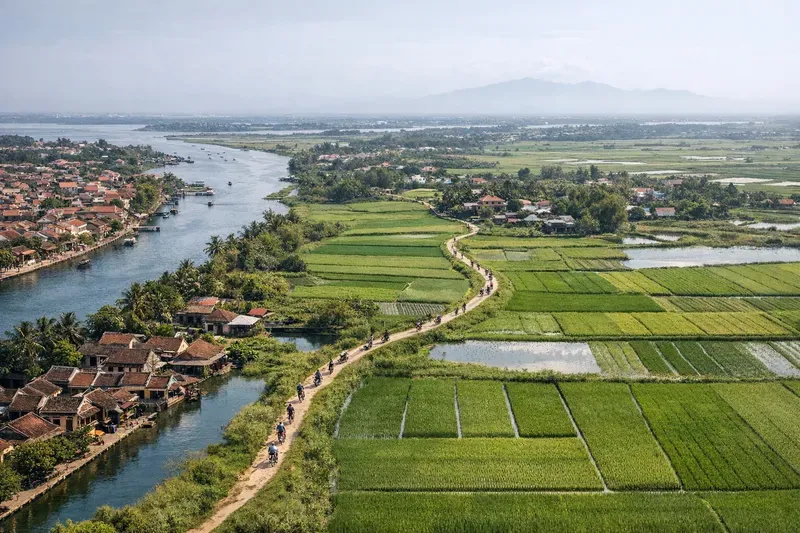
A comfortable version is 12–18 kilometers, depending on detours. Notably, most riders finish it in 2–3 hours with stops. Meanwhile, photo lovers can stretch it into a half-day without trying. As a result, it fits both relaxed mornings and late-afternoon rides.
- Start: Ancient Town (early is best)
- Middle: Tra Que village lanes + paddy viewpoints
- Optional: An Bang extension for a swim or coconut coffee
- Finish: easy return to town on calmer backroads
How to get to Tra Que vegetable village by bike (simple cues)
Tra Que sits just a few kilometers north of the Ancient Town area. Therefore, you can reach it in about 15–25 minutes at an easy pace. Specifically, aim to leave town on smaller lanes, not the busiest arterial roads. Moreover, once you see more gardens than shops, you’re close.
Look for these helpful landmarks rather than perfect street names. Additionally, keep canals on one side as you ride, since they guide you naturally. Notably, Tra Que feels quieter and greener, with more farm plots and fewer storefronts. As a result, you’ll notice the shift before you even see a sign.
- Use a map app and pin “Tra Que Vegetable Village” as your target
- Choose lanes with fewer buses and wider shoulders
- Follow canal-side paths when possible for calmer riding
Where the best rice paddy scenes usually are
The most expansive paddies sit between town, Tra Que, and the beach direction. Specifically, you’ll find long, open stretches where the horizon looks like a green quilt. Moreover, early morning often brings mist and soft light. Therefore, reflections in flooded fields can look unreal in photos.
Farmer activity varies by season and timing. Notably, you may see transplanting, watering, or harvesting depending on the week. Additionally, water buffalo sometimes appear near muddy edges or shaded paths. As a result, keep your camera ready, but stay respectful and out of the fields.
How to find calm lanes, bridges, and “classic” viewpoints
Some of the best shots happen on tiny bridges over canals. Additionally, the bridge itself frames rice paddies beautifully. Meanwhile, the quietest roads often feel like narrow concrete ribbons between fields. Therefore, if traffic picks up, take the next small lane toward the paddies.
Here’s a practical rule: follow the bicycles, not the tour buses. Specifically, if you see mostly locals on scooters and bicycles, you’re on a good road. Moreover, listen for quiet, since sound changes fast when you leave main routes. As a result, you’ll naturally drift toward peaceful scenes.
- Stop on small bridges for wide angles and reflections
- Look for lanes with field access paths branching off
- Choose canal-side routes for shade and fewer vehicles
Road conditions and the best bike for the job
Most lanes are flat and paved, which is the good news. However, you’ll hit rough patches, potholes, or sandy corners near fields. Therefore, ride a little slower in shaded areas where bumps hide. Additionally, keep your hands relaxed on the bars for comfort.
City bikes handle short loops well, especially if you keep speed low. Moreover, hybrids feel steadier on uneven concrete and longer distances. On the other hand, e-bikes make the heat and headwinds much easier. As a result, groups stay together without anyone struggling.
Offline navigation is your best friend. Specifically, download your map area before you leave hotel Wi‑Fi. Additionally, save pins for Tra Que, a coffee stop, and your return point in town. Therefore, you avoid constant screen-checking.
If you feel unsure, keep it simple and ride an out-and-back route. Notably, the countryside looks different on the way home, so it still feels fresh. Moreover, ask locals “Tra Que?” with a smile, and you’ll often get clear gestures. As a result, you stay relaxed and present.
- Download offline maps before you ride
- Pin 3–5 key stops rather than tracking every turn
- Use landmarks like canals, bridges, and open fields
- Choose an out-and-back plan if you hate navigation
3. Which Villages to Include: Tra Que vs Cam Kim vs Cam Thanh (Bay Mau Coconut Forest)
Tra Que: the easiest “wow” for first-timers
Tra Que feels special because it’s compact and visually striking. Specifically, you see neat garden rows, herb bundles, and watering techniques up close. Additionally, some places offer hands-on farming activities, like raking soil or planting greens. Therefore, it’s more than a photo stop.
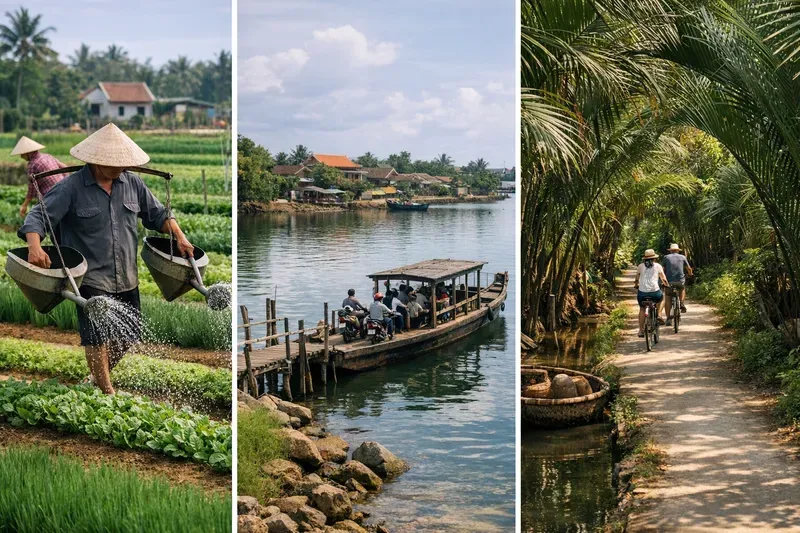
Food is another reason people love Tra Que. Notably, farm-to-table meals here can taste incredibly fresh. Moreover, you can pause for a cold drink while watching gardeners work. As a result, the village becomes a comfortable break point, not a rushed checkpoint.
Cam Kim Island: craft villages and riverside calm
Cam Kim gives you a different mood. Additionally, it feels more like an island day with riverside scenery and long, easy lanes. Depending on your route, you may cross by bridge or local ferry. Therefore, the ride itself becomes part of the experience.
Craft stops are the big draw. Specifically, you might see woodworking, boat-related workshops, or small family businesses. Moreover, the roads often feel quieter than beach routes. As a result, photographers like the mix of portraits, textures, and landscapes.
Cam Thanh (Bay Mau): coconut palms and basket boats
Cam Thanh looks nothing like open rice paddies. Instead, you ride toward waterways lined with coconut palms and narrow channels. Additionally, this area pairs naturally with bamboo basket boats. Therefore, it works well when you want variety in one day.
The vibe can feel busier at peak hours. Notably, basket boat activities attract groups, especially late morning. However, early starts still feel calm and scenic. As a result, timing matters more here than at Tra Que.
How to choose based on your travel style
Choose Tra Que if you want classic paddies and garden scenes with minimal planning. Additionally, it suits short rides and beginners. Choose Cam Kim if you love crafts and a slightly longer loop. Meanwhile, choose Cam Thanh if you want waterways and a boat segment.
- Nature + paddies: Tra Que
- Crafts + island lanes: Cam Kim
- Waterways + coconut palms: Cam Thanh (Bay Mau)
Mix-and-match combos that actually work
A full day opens up fun combinations. Specifically, Tra Que + Cam Kim makes a strong cultural loop with lunch in between. Additionally, Tra Que + Cam Thanh gives you a farm-to-water contrast. Therefore, you can tailor the day based on attention span and heat tolerance.
For families, keep transitions simple. Notably, too many stops can feel like “herding,” not exploring. Moreover, plan one main village and one add-on, not three. As a result, everyone stays happier, especially kids.
Accessibility and “busy” notes
Tra Que usually feels calm, even when popular. However, entry areas near garden experiences can bunch up mid-morning. Meanwhile, Cam Thanh can feel busiest around basket boat departure points. Therefore, ride a few lanes deeper for quieter scenes.
Rest stops are easy in all three areas. Specifically, you’ll find cafés, small restaurants, and shaded spots. Additionally, you can adjust pacing with frequent breaks. As a result, even casual riders can enjoy a gentle hoi an rural cycling route.
4. Suggested Itineraries: 2–3 Hours, Half-Day, and Full-Day Loops (With Beach Options)
2–3 hour quick ride (easy and self-guided friendly)
If you want an uncomplicated ride, keep it tight. Start in Hoi An, head through rice paddy lanes, stop at Tra Que, then loop back. Additionally, add one drink break so it feels like a mini outing. Therefore, you get the countryside feeling without committing a whole day.
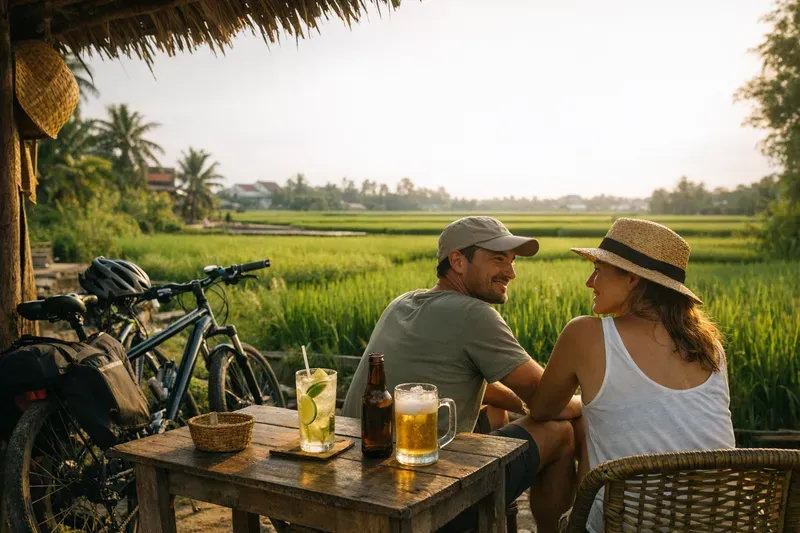
- Ride out early, before the streets heat up
- Photo stop on a canal bridge near the paddies
- Tra Que garden rows for 20–30 minutes
- Coffee or sugarcane juice break, then return
Half-day loop (guided or DIY) for first-timers who want structure
A half-day itinerary adds culture without feeling rushed. Specifically, you can include a village market stop for fruit or snacks. Additionally, you’ll have time for a short farm visit or a hands-on garden activity. Therefore, it’s ideal if you want more than photos.
Guided half-days shine because the guide stitches the story together. Notably, you learn why fields look flooded, and how farmers time planting. Moreover, you get smoother logistics for stops and water refills. As a result, you spend more time enjoying and less time deciding.
Full-day loop: Tra Que → Cam Kim crafts → lunch → optional Cam Thanh
A full day works best when you keep the ride gentle and the stops meaningful. Start with Tra Que while it’s quiet. Additionally, loop toward Cam Kim for craft village scenery. Therefore, you build variety without piling on distance.
Plan lunch as a “reset,” not an afterthought. Notably, a farm-to-table meal or local restaurant break helps with heat. Moreover, you can decide midday if you want the Cam Thanh add-on. As a result, you stay flexible if weather changes.
- Morning: Tra Que + rice paddies
- Late morning: Cam Kim lanes and craft stops
- Midday: lunch and shade break
- Afternoon option: Cam Thanh waterways or return to town
Optional beach extension: An Bang or Cua Dai
An Bang Beach is a favorite cycling add-on, especially late afternoon. Additionally, the ride feels breezier as you approach the coast. Therefore, it’s perfect for golden-hour photos and a cold drink. Moreover, you can lock the bike and dip your feet in.
Cua Dai can also work, but parts of the route use wider roads. Therefore, ride single file and stay predictable. Additionally, consider going earlier or choosing calmer lanes to approach it. As a result, you keep the beach extension enjoyable, not stressful.
Time planning with real-world pacing
People often underestimate stop time. Specifically, a “quick photo” becomes 10 minutes when the light is perfect. Additionally, water breaks take longer with kids. Therefore, add a buffer and your day will feel smoother.
- Ancient Town → Tra Que: 15–25 minutes
- Tra Que → paddy viewpoints: 10–20 minutes
- Photo + drink stop: 20–40 minutes
- Tra Que → An Bang: 20–35 minutes (optional)
Rest logistics: shade, toilets, and water stops
Rest breaks are easy if you plan around cafés. Additionally, cafés give shade, toilets, and ice-cold drinks in one stop. Therefore, pin 2–3 cafés on your map before leaving. Notably, Tra Que and beach areas have plenty of options.
Carry water anyway, even for short rides. Moreover, refill whenever you pass a shop and your bottle feels half empty. As a result, you avoid the “sudden crash” that can hit in humid weather.
5. Best Time to Cycle in Hoi An: Sunrise, Morning, or Late Afternoon
Sunrise rides: cool air and dreamy rice paddy light
Sunrise is the most comfortable time to ride. Additionally, the rice paddies glow softly, and reflections look dramatic. Therefore, photographers love it for wide shots and quiet lanes. Notably, you’ll also hear birds and village sounds more clearly.
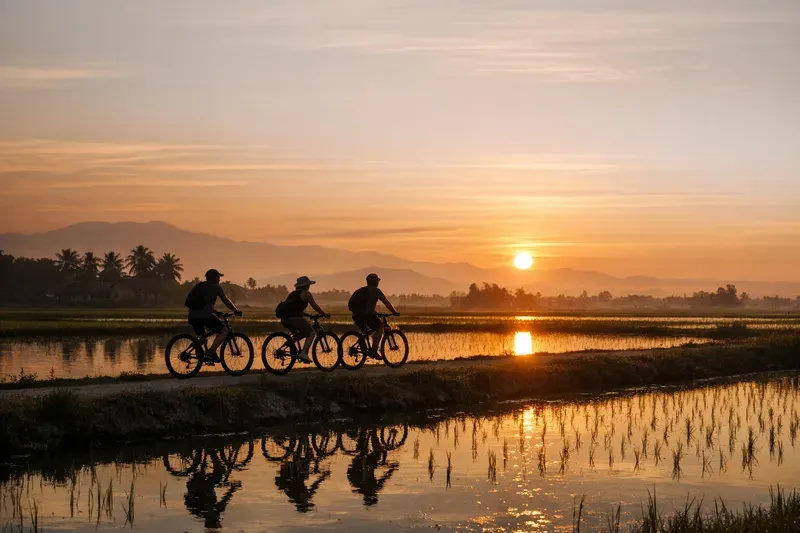
Traffic stays lighter at this time. Moreover, you can stop more safely for photos without feeling in the way. As a result, sunrise feels like you got a private version of the countryside.
Morning rides: the practical family sweet spot
Morning rides work well for most travelers. Specifically, start after breakfast, then finish before peak heat. Additionally, you can combine it with lunch back in town. Therefore, it fits families who need a slower start.
A helpful target is to finish your main riding by late morning. Moreover, save indoor activities or long meals for the hottest window. As a result, the day stays comfortable without strict schedules.
Late afternoon: golden hour and easy beach pairing
Late afternoon rides feel romantic and relaxed. Additionally, the light turns warm, and paddies look richer in color. Therefore, it’s an easy time to add An Bang for sunset. Notably, breezes often pick up near the coast.
However, plan your return before it gets fully dark. Therefore, check your lights or bring a small clip-on light. Additionally, keep a simple route home to avoid wrong turns. As a result, you end the ride calm and confident.
Weather and rainy-day reality
Hoi An can feel hot and humid, especially midday. Therefore, dress for sweat and plan extra water. Additionally, cloud cover can help, but humidity still drains energy. As a result, short loops often feel better than long slogs.
Rainy cycling can still be pleasant if it’s light. However, heavy rain can flood small lanes or hide potholes. Therefore, choose more paved routes and skip slippery farm edges. Additionally, bring a poncho and protect your phone.
Rain plan: what to confirm with tours
Tour operators handle rain differently. Specifically, some reschedule, while others shorten the route. Additionally, some provide ponchos or swap to e-bikes for easier riding. Therefore, confirm the plan before you pay.
- Ask if you can reschedule for free
- Confirm if they provide ponchos and dry bags
- Check if basket boat segments change in rain
- Ask how they handle lightning or strong winds
6. Guided vs Self-Guided Hoi An Countryside Cycling (Commercial Decision Guide)
When self-guided cycling makes sense
Self-guided cycling in hoi an countryside is great if you feel confident on a bike. Specifically, the Tra Que loop is simple and forgiving. Additionally, you can stop wherever you like, for as long as you like. Therefore, it works well for budget travelers.
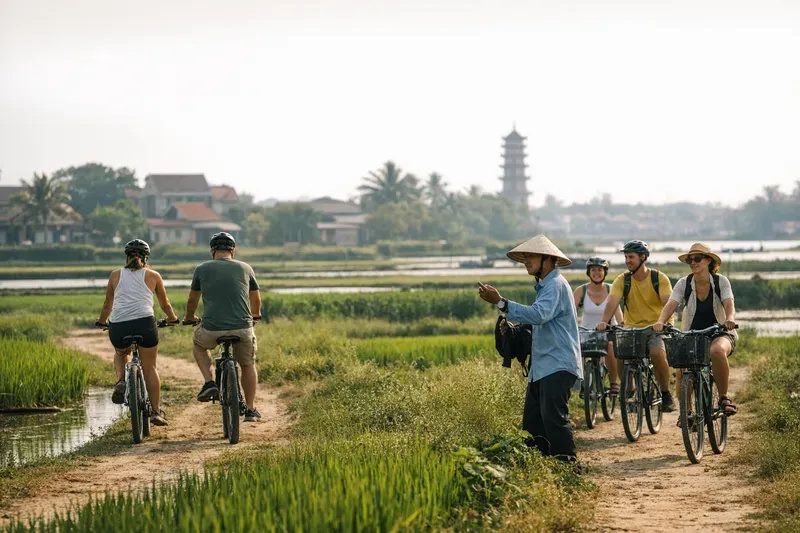
DIY also fits travelers who love wandering. Moreover, you can detour down any quiet lane that looks interesting. However, you’ll miss local context unless you research a bit first. As a result, the ride becomes more scenic than educational.
When a guided bike tour is worth it
A guided hoi an countryside cycling tour offers rich storytelling, not just beautiful scenery. Knowledgeable guides highlight traditional farming methods, seasonal activities, and local customs along the way. They also know the hidden, scenic lanes that remain peaceful even during peak hours, ensuring a smoother ride with fewer wrong turns.
Furthermore, guided tours unlock authentic experiences that are difficult to arrange on your own. Farm visits, family-run craft workshops, and local tasting stops are much easier to navigate with a local introduction. Having a guide also provides essential language support in bustling markets and small villages, granting you deeper cultural access with minimal effort.
Small group vs private: which one fits your trip
Choosing the right tour style depends entirely on who you are traveling with and how much flexibility you desire.
| Tour Style | Best For | Key Characteristics |
| Small Group | Solo travelers, budget-conscious riders | Excellent value, high social energy, inclusive pacing, fixed schedules. |
| Private | Couples, families with kids, photographers | Completely flexible pace, customizable stops, ability to mix manual and e-bikes. |
Small-group tours offer a fantastic balance of value and social interaction. They are perfect for solo travelers looking for company, allowing you to share costs while keeping the group size manageable. A reputable operator will ensure the pace remains gentle and inclusive for everyone.
Private tours shine when you need flexibility. You can start earlier to beat the heat, linger longer at scenic spots, or skip tourist-heavy areas entirely. You can even customize equipment so that everyone enjoys the day at their own rhythm.
What a quality countryside bike tour should include
When booking your hoi an countryside cycling adventure, quality always shows in the details. A reputable operator will provide well-maintained bicycles and properly fitted helmets right from the start. Complimentary water and light snacks should also be standard inclusions, ensuring you never feel nickel-and-dimed for basic necessities.
If you are traveling with children, be sure to inquire about family-specific equipment. Reliable child seats and appropriately sized kids’ bikes are far more important than fancy brand names. Furthermore, a tour provider that carries rain gear and a well-stocked first-aid kit demonstrates excellent preparation, allowing you to ride with absolute peace of mind and fewer “what if” worries.
Your Essential Tour Checklist:
-
A knowledgeable guide with a clearly planned route.
-
A comfortable, properly sized helmet for every rider.
-
Drinking water, along with snacks or fresh fruit.
-
Child seats or tag-along bikes (if required).
-
Rain ponchos and a basic first-aid kit.
-
Clear explanations regarding tour insurance and safety procedures.
-
A convenient hotel pickup option if your accommodation is located far out.
Typical prices and what changes the cost
Prices vary by group size and inclusions. In general, small-group rides often cost about $25–$45 USD per person. Additionally, private tours commonly run $55–$120 USD per person, depending on size. Therefore, it helps to compare what’s included.
E-bikes can add around $10–$25 USD per person. Moreover, meals, cooking classes, and basket boats raise the total. On the other hand, a higher price can still be good value if logistics are smooth. As a result, focus on the full package, not one number.
Booking checklist that prevents bad surprises
Before you book, ask a few direct questions. Specifically, confirm total riding distance and how often you stop. Additionally, ask where the ride uses busier roads. Therefore, you know what you’re signing up for.
- What time do you start, and can you start earlier?
- What is the total distance, and how many stops?
- What happens if it rains or someone feels tired?
- Do you offer e-bikes, and what is the extra cost?
- Are helmets, water, and snacks included?
- Can you accommodate child seats or small bikes?
If you want curated options without guesswork, see our hoi an bike tour page. Additionally, you can message us with your hotel location and preferred pace. Therefore, we can suggest a route that fits Tra Que, rice paddies, and any add-ons.
7. Bicycle Rentals and Best Bike Types (City Bike, Hybrid, or E-Bike)
Where to rent a bicycle in Hoi An
You’ll find rentals almost everywhere. Hotels and guesthouses often lend bikes free or cheaply, which is convenient. However, these bikes can feel heavy or poorly maintained. Therefore, check them carefully before trusting a longer ride.
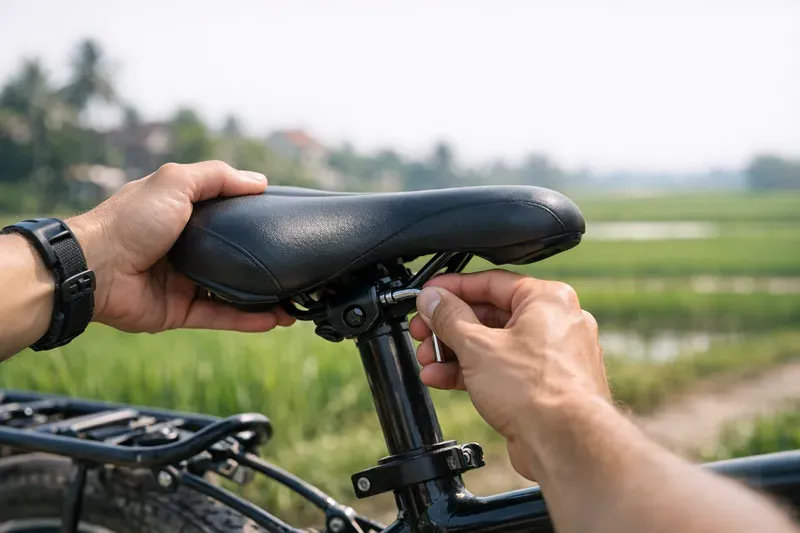
Rental shops near the Ancient Town often have better selections. Additionally, tour operators sometimes rent out their bikes during off-hours. Moreover, these usually include better brakes and tires. As a result, paying a bit more can improve comfort a lot.
Choosing the right bike for your route
Match the bike to your plan, not your ego. Specifically, a city bike works for a short, flat Tra Que loop. Additionally, a hybrid feels better for longer rural lanes and uneven patches. Therefore, you’ll feel less vibration and fatigue.
E-bikes are a game-changer in heat. Moreover, they help mixed fitness groups stay together. On the other hand, you still need basic handling skills and careful braking. As a result, do a short practice ride before heading into lanes.
- City bike: short loops, relaxed pace, budget-friendly
- Hybrid: longer routes, better stability on rough sections
- E-bike: heat, headwinds, longer distances, mixed groups
Fit and comfort checklist (do this in 60 seconds)
Fit matters more than brand. Specifically, set saddle height so your knee stays slightly bent at the bottom of the pedal stroke. Additionally, squeeze brakes firmly to check responsiveness. Therefore, you avoid pain and surprises on the road.
- Correct saddle height and comfortable grips
- Front and rear brakes working smoothly
- Tires firm, not squishy
- Bell and lights if you might ride near dusk
- Basket and phone mount if you plan to navigate
Family needs: keeping the group together
When preparing for a hoi an countryside cycling trip with your family, prioritizing comfort and proper pacing is essential. Matching the right equipment to your child’s age ensures a smooth experience for everyone.
Choosing the Right Gear for Kids:
-
Toddlers: Secure child seats provide a safe and comfortable ride.
-
Older Kids: Tag-along attachments are perfectly suited for children who want to pedal but might tire easily on their own.
-
Confident Young Riders: Properly fitted child-sized bikes give them a wonderful sense of independence.
Note: Always confirm equipment availability and exact sizing with the tour operator before finalizing your payment.
Leveling the Playing Field
If one adult is carrying a child or pulling extra weight, consider requesting an e-bike. The electric assist is a game-changer—it effortlessly compensates for the heavier load and eliminates the frustrating dynamic of one person constantly waiting for the other to catch up. As a result, your family ride remains a fun, relaxed bonding experience rather than a competitive workout.
What to inspect before you pay
Do a quick test ride, even if it feels awkward outside the shop. Specifically, listen for chain skipping and check if gears shift smoothly. Additionally, watch for wheel wobble that signals a loose spoke or bent rim. Therefore, you avoid breakdowns in rice paddies.
- Chain looks oiled and doesn’t jump
- Gears shift without loud clunks
- Wheels spin straight, without wobble
- Brakes stop you quickly and evenly
Practical add-ons you’ll be glad you brought
A few small items can save the day. Additionally, a lightweight poncho fits in any basket. Moreover, a basic lock lets you relax at cafés and beaches. As a result, you can linger without worry.
- Rain poncho
- Small repair kit or at least a spare tube
- Portable lock
8. Cycling Safety Tips, Traffic Reality, and Countryside Etiquette
Is cycling in Hoi An safe with traffic?
Hoi An is generally friendly to bicycles, but traffic still exists. Town roads can feel busy with scooters, especially near peak times. However, rural lanes stay calmer, with slower vehicles and more space. Therefore, route choice makes a big safety difference.
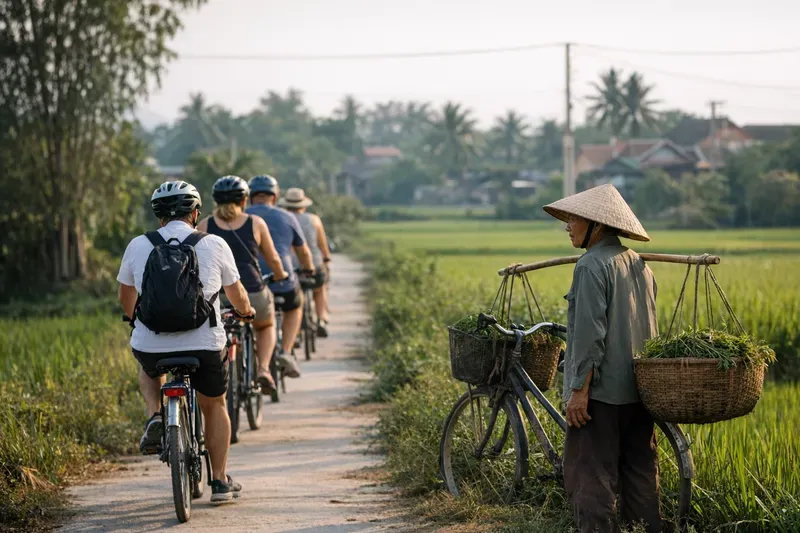
Beach roads can be mixed. Notably, some stretches have wider roads and faster scooters. Therefore, ride single file and stay alert near intersections. Additionally, avoid headphones so you hear what’s behind you.
Core safety rules that actually work
Predictability keeps you safe. Specifically, ride in a straight line and avoid weaving around potholes suddenly. Additionally, signal turns clearly with your hand. Therefore, scooters can pass you smoothly.
- Ride single file on busier roads
- Keep right and hold a steady line
- Signal early before turning
- Don’t stop suddenly for photos
Intersection strategy: calm, slow, and deliberate
While enjoying your hoi an countryside cycling adventure, local intersections might feel intimidating until you learn the rhythm of the traffic. The key to staying safe is to ensure you remain stable and predictable to other vehicles on the road.
Tips for Crossing Safely:
-
Pace yourself: Slow down early as you approach a crossing.
-
Acknowledge drivers: Try to make eye contact with approaching motorists whenever possible.
-
Wait for a gap: Never speed up to beat the traffic; instead, wait patiently for a clear and safe opening.
When in doubt, walk it out: If an intersection ever makes you feel unsure, simply dismount and walk your bike across as a pedestrian. Taking those extra 30 seconds buys you absolute peace of mind, making it an especially smart move for children and nervous riders.
Heat and hydration safety (especially for kids)
Heat sneaks up in humid weather. Therefore, drink before you feel thirsty and stop in shade often. Additionally, watch for early signs like headache, dizziness, or irritability. As a result, you can rest before things get serious.
- Carry at least one full bottle per person
- Take shade breaks every 30–45 minutes
- Use sunscreen and a brimmed hat
- Plan shorter distances for children
Farm and village etiquette
The countryside is people’s workplace and home. Specifically, don’t enter rice fields or garden beds without permission. Additionally, avoid blocking narrow lanes when you stop. Therefore, locals can pass without awkwardness.
Keep noise low near homes and temples. Moreover, smile and wave, since small interactions make the day warmer. As a result, you feel like a guest, not a disruption.
Photography etiquette: better photos, better vibes
Great photos don’t require stepping on crops. Specifically, shoot from paths, bridges, and lane edges. Additionally, ask before taking close portraits of workers or children. Therefore, you show respect and often get a better moment.
If someone seems uncomfortable, lower the camera. Moreover, offer a friendly nod and move on. As a result, your ride stays positive and culturally sensitive.
9. Photo Stops, Food to Try, and Add-Ons (Cooking Class, Basket Boat, Eco Tours)
Photo stops you’ll remember later
Hoi An countryside scenes change every few minutes on a bike. Specifically, rice paddy reflections look best when fields hold shallow water. Additionally, canal bridges give you leading lines for wide landscape shots. Therefore, slow down when you see a clean horizon.
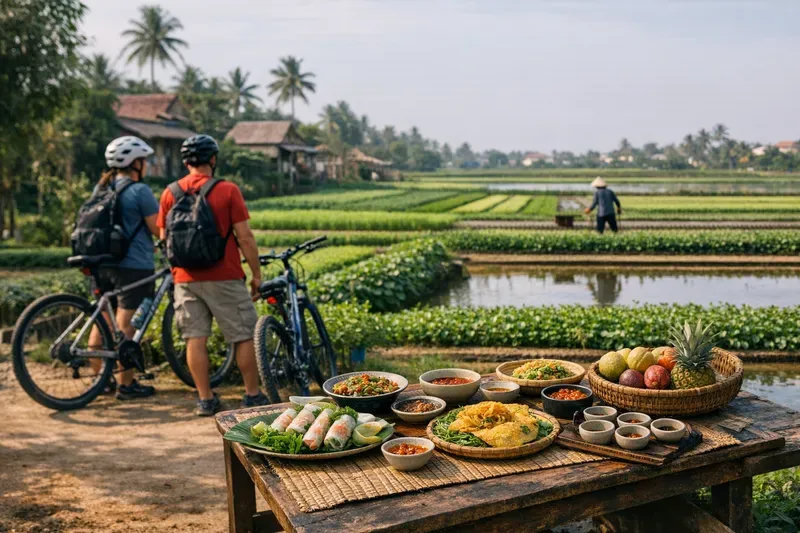
Tra Que offers close-up textures that paddies don’t. Notably, the garden rows create strong patterns, especially in soft light. Meanwhile, buffalo sightings happen sporadically, often near muddy edges. As a result, patience beats chasing.
- Rice paddies at sunrise for reflections
- Small canal bridges for classic frames
- Tra Que garden rows for textures and patterns
- Quiet lanes at golden hour for silhouettes
Local foods and drinks to try during the ride
Stopping for drinks is part of the fun. Specifically, sugarcane juice is sweet, cold, and perfect after a hot stretch. Additionally, Vietnamese iced coffee gives a strong caffeine hit. Therefore, plan at least one drink stop, even on short loops.
Keep it food-safe while cycling. Moreover, choose busy stalls where turnover is high. Additionally, carry hand sanitizer and drink from sealed bottles if you feel cautious. As a result, you avoid stomach problems that ruin the next day.
- Sugarcane juice with ice
- Vietnamese iced coffee
- Seasonal fruit like bananas or mango
- Simple packaged snacks for quick energy
Combining cycling with a cooking class (best flow)
A cooking class pairs beautifully with hoi an countryside cycling. The ideal itinerary naturally flows from a bustling local market to a working farm—such as the famous Tra Que Vegetable Village—and finally to the kitchen. By the time you tie on your apron, you will arrive hungry and curious, making the culinary experience even more enjoyable. It is a fantastic combination for couples, families, and food lovers alike.
Strategic Timing for a Balanced Day
Timing is everything when combining these activities:
-
Morning: Start your bike ride early to enjoy the cool, fresh air while exploring.
-
Midday: Retreat to the shade to cook and eat during the hottest hours of the day.
-
Afternoon: Relax and digest your meal instead of pedaling under the intense afternoon sun.
This smart scheduling ensures your day feels perfectly balanced and comfortable.
A True Farm-to-Table Experience
For a seamless itinerary, consider booking Papa’s Cooking Class as your culinary add-on. By building your cycling route around Tra Que, you get to see exactly how the region’s fresh herbs and vegetables are grown. As a result, the meal you prepare feels deeply connected to the beautiful agricultural landscapes you just experienced on the road.
Basket boat + cycling: what it’s like and who loves it
Basket boats are short, playful, and very different from cycling. Typically, the boat segment adds about 45–90 minutes, including waiting time. Additionally, you’ll float through coconut waterways with plenty of photo moments. Therefore, it’s popular with families and first-time visitors.
However, choose timing carefully to avoid crowds. Moreover, ask operators about group size and the exact route. As a result, you get a calmer experience and better photos.
Eco and responsible travel: what “authentic” looks like
Not every eco label means much. Specifically, an authentic hoi an eco cycling tour should show clear community benefit. Additionally, it should keep groups small and avoid single-use plastic where possible. Therefore, ask what they do, not what they claim.
- Small groups with local guides
- Fair wages and transparent community support
- Reusable water options or large refill bottles
- Stops that respect farms and private spaces
If sustainability matters to you, explore our hoi an eco tour options as a companion experience. Moreover, you can combine it with Tra Que and rice paddies for a meaningful day. As a result, your spending supports the places you enjoy.
For background on the region’s farming heritage and geography, you can also read about Hội An and rice cultivation. Additionally, these help you recognize what you see in the fields. Therefore, your ride feels more connected to local life.
Conclusion: Your Perfect Ride Awaits
Hoi an countryside cycling is at its best when you are gliding along flat, quiet lanes that seamlessly stitch lush rice paddies to authentic village life. For first-time visitors, the Tra Que route offers the easiest win, providing expansive views and wonderfully calm roads.
To make the most of your adventure, keep these final takeaways in mind:
-
Time it right: Opt for a sunrise or morning ride to stay cool and capture the most beautiful lighting for your photos.
-
Choose the right gear: Your bike choice matters. Hybrids or e-bikes are fantastic options that truly shine on longer loops.
-
Pick your travel style: Self-guided rides offer ultimate freedom for budget-conscious travelers. However, a guided tour unlocks hidden lanes, rich local stories, and smoother logistical stops.
-
Level up your day: Easily elevate your itinerary by pairing your ride with a relaxing beach break, a traditional basket boat ride, or a hands-on cooking class.
Ready to Ride?
Explore and book your ideal experience through our curated bike tour options! Alternatively, message us to tailor a custom private route featuring Tra Que, the scenic rice paddies, and your choice of optional beach, basket boat, or cooking class add-ons.