





Hoi An Walking Tour: Best Route, Map & Guide

Want to squeeze Hoi An Old Town’s biggest highlights into a few hours, without walking in circles? A smart hoi an walking tour can feel like time travel, with lantern-lit lanes, carved gates, and river views. However, most travelers arrive with the same doubts. Where do you start, how long should you walk, and do you need tickets?
Moreover, it’s hard to know if a guided history walk is worth it over a DIY loop. You might see the Japanese Covered Bridge, yet miss why it exists. You might pass an assembly hall, yet miss the symbols above the altar. Therefore, a good route matters as much as good storytelling.
This guide gives you a clear, walkable itinerary that forms a logical loop. Additionally, you’ll get a step-by-step Hoi An self guided walking tour plan you can follow on foot. Finally, you’ll see a practical comparison of self-guided vs group vs private options, with timing and comfort tips.
1. Hoi An Walking Tour at a Glance (Duration, Difficulty, Highlights)
What a “Hoi An walking tour” usually includes
A typical Hoi An walking tour focuses on the compact Old Town heritage grid. Specifically, you’ll weave through shop-house lanes, pause at key landmarks, and duck into shaded courtyards. Additionally, most routes include at least one ticketed interior, like an old house or an assembly hall. Meanwhile, you’ll often finish with a riverside stroll for photos and a breeze.

Notably, the best walks balance “big sights” with small moments. Think incense drifting from a side temple. Think old timber beams showing flood marks. Therefore, a great route includes a few quiet detours, not only the headline stops.
Quick snapshot: 60 / 90 / 120+ minute options
If you only have a short window, you can still see a lot. However, you’ll enjoy Hoi An more if you build in breaks. Additionally, the Old Town rewards slow walking and short stops for shade.
- 60 minutes (highlights loop): ~1.6–2.0 km, brisk pace, minimal interiors, quick bridge-and-river finish.
- 90 minutes (balanced walk): ~2.3–2.8 km, 1–2 interiors, snack stop near the market.
- 120+ minutes (deep dive): ~3.0–4.0 km, 3–5 interiors, coffee break, extra alleys and photo time.
Difficulty and comfort: easy legs, tricky surfaces
The terrain is flat, so your legs won’t suffer. However, the paving can feel uneven, especially on older lanes. Additionally, heat and humidity can turn an “easy walk” into a sweaty one. Therefore, plan shade stops and carry water.
Rain changes everything, too. Specifically, sudden showers can flood low spots and make tiles slick. Moreover, covered halls and cafés become your best friends. As a result, a flexible route works better than a rigid checklist.
What you’ll see on most routes
Most classic routes include the Japanese Covered Bridge, one or two assembly halls, and an old merchant house. Additionally, you’ll usually pass the edge of the Central Market for snacks and people-watching. Meanwhile, the Thu Bon River walk adds open views and lantern reflections after dusk. Therefore, even a short loop can feel complete.
Who this suits (and small notes for seniors and kids)
This walk suits solo travelers, couples, families, and small groups. Notably, kids often enjoy the bridge, lanterns, and riverfront more than museums. Additionally, seniors usually do well if you plan benches and shade. Therefore, build micro-breaks into your route rather than pushing straight through.
Most importantly, you can keep it simple. Use the self-guided loop below, then upgrade if you want deeper stories. Additionally, you can save a map screenshot, or print a simple checklist for each stop.
Teaser: Below, you’ll get a practical Hoi An walking tour map in step-by-step form. Moreover, you’ll also see when a guided or private option makes your day easier.
2. Is Hoi An Old Town Walkable? Timing, Crowds, and Best Time of Day
Walkability: compact, mostly pedestrian-friendly
Hoi An Old Town is very walkable because the core area is compact. Additionally, many central streets restrict vehicles at certain hours. That makes strolling feel calmer than many Vietnamese cities. However, you’ll still see bikes and delivery scooters at the edges.
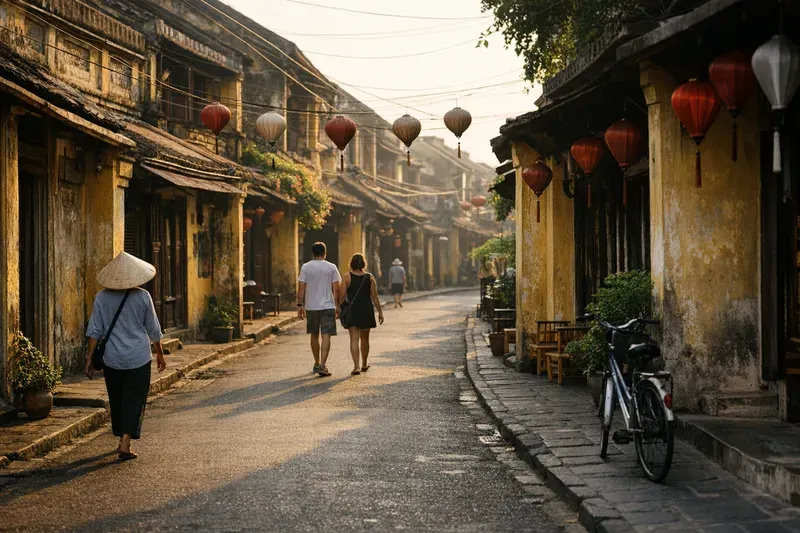
Specifically, the best strolling zones sit between the market side and the river. The lanes form a loose grid, so you can reroute easily. Moreover, you can switch to a parallel street when one lane feels crowded. As a result, you rarely get “stuck” on one path.
How long does a Hoi An walking tour take?
Most people spend 60 to 120 minutes on highlights, depending on interiors. However, a true history-focused walk often takes 2 to 3 hours. Additionally, add 20 to 40 minutes if you want coffee, snacks, or extra photos. Therefore, your pace matters more than distance.
For instance, two travelers can walk the same route and have different experiences. One person pops into three halls and reads every plaque. The other takes photos outside and keeps moving. Meanwhile, families often slow down near the riverfront for breaks.
Best time of day: morning, golden hour, or lantern time
Morning is the easiest time to walk, especially if you dislike heat. Additionally, the lanes feel calmer, and shops open gradually. Therefore, you can photograph architecture without constant crowds. Notably, the market edge also feels more “local” earlier.
Late afternoon brings warmer light and a softer mood. Moreover, the river starts to glow near sunset, which helps portraits. However, crowds build as day-trippers arrive. As a result, it helps to do ticketed interiors before the busiest hours.
Evening lantern hours feel magical, with reflections on the Thu Bon River. Additionally, the vibe of your Hoi An walking tour shifts from “heritage walk” to “festival stroll.” However, some lanes get congested and noisy. Therefore, pick a few photo spots and keep moving.
Crowd patterns and simple ways to dodge them
Group tours often follow a predictable loop. Specifically, many walk from the bridge toward assembly halls, then end by the river. Therefore, you can reduce crowd friction by reversing that flow. Additionally, parallel streets one block away often feel dramatically quieter.
- Start early to enjoy landmark exteriors before peak foot traffic.
- Use parallel lanes when the main strip feels jammed.
- Reverse the common loop to avoid walking behind big groups.
- Enter ticketed sites when groups cluster outside for photos.
Weather planning: heat, humidity, and sudden showers
Heat and humidity can spike fast, even on a short walk. Therefore, plan a “cool-down stop” every 20 to 30 minutes. Additionally, drink before you feel thirsty. Meanwhile, choose shaded lanes when the sun feels sharp.
Rain requires a different strategy. Specifically, use assembly halls, museums, and covered cafés as shelter. Moreover, carry a small poncho, since umbrellas can clash in narrow lanes. As a result, you can keep your route intact with short indoor pauses.
Safety and etiquette basics
Hoi An feels safe for walking, yet stay alert near the Old Town edges. Additionally, look both ways for bikes and scooters crossing side streets. Therefore, avoid stepping backward for photos without checking behind you. Notably, watch your footing on slick tiles after rain.
Temple and hall etiquette is simple and respectful. Specifically, keep voices low and dress modestly if you enter altars. Moreover, ask before photographing worshippers. As a result, your visit feels welcome instead of intrusive.
3. Best Hoi An Self Guided Walking Tour Map (Step-by-Step Loop)
How to use this route (clockwise or counterclockwise)
This is a loop you can walk in either direction. However, clockwise tends to feel more “logical” for first-timers. It starts at the market edge, hits interiors earlier, and ends by the river. Additionally, counterclockwise helps you dodge crowds if most visitors flow the other way.

Therefore, pick a timing goal before you start. If you want 60 minutes, focus on exteriors and one interior. If you want 90 minutes, add two interiors and one break. Moreover, if you want 120+ minutes, take detours and enjoy a slow river finish.
Start and end points (with easy drop-off alternatives)
A practical start point for your Hoi An walking tour is the Central Market edge near the Old Town entrance streets. It’s easy for taxis and ride-hailing to drop you nearby. Additionally, it gives you instant access to snacks, water, and restrooms. Therefore, you can begin comfortably instead of hunting for basics.
An alternative start is the riverside promenade on the Old Town side. It works well near sunset when you want river photos first. However, starting here can feel crowded in the evening. As a result, morning walkers usually prefer the market edge.
The loop of your Hoi An walking tour can end wherever you feel done. Specifically, you can finish at the river for lantern views or back near the market for transport. Moreover, if you plan dinner outside the Old Town, ending near the edges saves time.
Step-by-step itinerary (numbered loop)
Below is your step-by-step best walking route Hoi An plan. Additionally, each stop includes a “why it matters” note. You can also shorten it by skipping one interior cluster. Therefore, treat it like a menu, not a strict exam.
- Stop 1: Central Market edge (orientation + quick snack)
- Stop 2: Photo lanes near the market (first lanterns + calm corners)
- Stop 3: Japanese Covered Bridge (iconic landmark)
- Stop 4: Quieter parallel streets (breather + better angles)
- Stop 5: Tan Ky Old House (heritage interior)
- Stop 6: Optional second interior (museum or another old house)
- Stop 7: Fujian Assembly Hall (courtyards + altars)
- Stop 8: Cantonese Assembly Hall (detail spotting)
- Stop 9: Thu Bon riverside walk (sunset + reflections)
- Stop 10: Hidden alley detour (craft lanes + shade)
Stop cluster A: arrival, orientation, and easy wins
Stop 1 (Central Market edge): Start with a quick lap along the market boundary streets. Additionally, scan for water, fruit, or a small snack you can carry. Therefore, you won’t waste time later when you feel tired. Notably, this area also gives you lively “real Hoi An” photos.
Stop 2 (nearby lanes for first photos): Walk into the Old Town grid and take your first slow minutes. Specifically, look for yellow walls, wooden shutters, and lantern strings. Moreover, morning light makes textures pop without harsh glare. As a result, your first photos often become your favorites.
Stop cluster B: Japanese Covered Bridge route and best angles
Stop 3 (Japanese Covered Bridge): Approach the bridge from a side lane instead of the busiest front during your Hoi An walking tour. Additionally, pause before you cross to photograph the roofline and entrance figures. Therefore, you capture detail instead of only crowd shots. Notably, the bridge links two historic community areas.
After the bridge, take a short “quiet reset.” Specifically, move one block to a parallel street to breathe. Moreover, those lanes often have the same architecture with fewer people. As a result, you’ll enjoy this peaceful segment of your Hoi An walking tour without shoulder-to-shoulder walking.
If you want background reading later, the bridge connects to the city’s trading-port story. Additionally, Hoi An’s wider context appears in the Hoi An overview, including its historic role as a port.
Stop cluster C: heritage interiors (Tan Ky Old House + one option)
Stop 5 (Tan Ky Old House): This is a classic stop because it shows the merchant-house layout. Additionally, you’ll see timber beams, carved details, and a narrow “tube house” shape. Therefore, you understand how families lived and traded in limited space. Notably, guides often point out flood marks on interior posts.
Stop 6 (choose one): Pick a second interior based on your interest and energy. Specifically, choose a small museum if you like artifacts and labels. On the other hand, choose another old house if you love architecture. As a result, you keep the tour personal instead of repetitive.
- If you love history: choose a museum-style stop for context.
- If you love design: choose an old house with courtyard details.
- If you feel hot: choose the most shaded, best-ventilated option.
Stop cluster D: assembly halls (Fujian + Cantonese)
Stop 7 (Fujian Assembly Hall): Walk in slowly and notice the entry gate first. Additionally, look for layered courtyards that guide you toward the main altar. Therefore, you can “read” the space like a story, from public to sacred. Notably, the hall often features vivid dragons and ceramic mosaics.
Stop 8 (Cantonese Assembly Hall): This hall feels different in details and color choices. Moreover, you’ll often spot bolder roof ornaments and intricate relief work. However, it can get busy when groups arrive together. Therefore, step aside for two minutes and let the wave pass.
Stop cluster E: Thu Bon River walk and sunset viewpoints
Stop 9 (Thu Bon riverside walk): Head toward the promenade for open air and slower pacing. Additionally, sunset light turns the yellow façades warm and soft. Therefore, it’s the best time for portraits and skyline shots. Notably, lantern reflections show best when the water stays calm.
Choose one “anchor viewpoint” and one “quiet viewpoint.” Specifically, the central promenade offers classic lantern shots. Meanwhile, a short walk away usually gives you calmer family photos. As a result, you get both the iconic view and a peaceful moment.
If you plan to visit the wider region later, you can learn about the river’s role in central Vietnam’s geography. Additionally, the Vietnam reference overview provides helpful context for travelers.
Hidden alleys and courtyard detours (short spurs)
Stop 10 (hidden detours): After the river, take one or two short spurs into smaller lanes. Specifically, look for artisan workshops, lantern makers, and small courtyards behind shop fronts. Moreover, these areas often feel quieter even during peak hours. Therefore, you get the “slow Hoi An” feeling without leaving the center.
Use a simple rule to avoid getting lost. Specifically, keep the river on one side as your anchor. Additionally, pop back to the main lane after five to seven minutes. As a result, you enjoy discovery without stressing about navigation.
Restrooms, water, and micro-break plan (every 20–30 minutes)
Comfort planning makes a walking tour feel easy. Therefore, schedule a micro-break every 20 to 30 minutes. Additionally, use interiors and cafés as “cool-down stations.” Notably, even a two-minute pause in shade lowers fatigue fast.
- Water: buy near the market edge before you start.
- Restrooms: use cafés, larger restaurants, or ticketed sites when available.
- Shade breaks: assembly hall courtyards and covered lanes work well.
- Snack timing: carry fruit or a small pastry to avoid hunger dips.
4. Must-See Stops on a Hoi An Heritage Walk (What to Look For)
Mini context: why the Old Town looks like this
Hoi An grew as a trading port, which shaped its streets and buildings. Specifically, Vietnamese, Chinese, and Japanese influences show up in roofs, carvings, and courtyard layouts. Additionally, shop-houses often look narrow from the street, then extend deep inside. Therefore, the Old Town feels like a living museum of commerce and culture.

Look for repeating patterns as you walk. Moreover, you’ll spot heavy timber frames, tiled roofs, and inward-facing courtyards. However, many details hide above eye level. As a result, glance up at beams, balconies, and roof ridges.
Japanese Covered Bridge: symbolism and smart timing
The Japanese Covered Bridge is more than a photo stop. Specifically, it functioned as a covered crossing and a community landmark. Additionally, the entrance figures and roof details carry symbolic meaning. Therefore, you’ll enjoy it more if you pause and look closely.
For photos, arrive early or wait out a crowd wave. Moreover, you can shoot from slightly off-center for cleaner lines. However, the most popular angles clog fast at night. As a result, use a parallel lane and return when it clears.
Tan Ky Old House (and similar houses): what makes them special
Old merchant houses show how trade shaped daily life. Specifically, you’ll see timber frames designed to last, with spaces for selling goods in front. Additionally, many homes include flood markers that tell a quiet story of river life. Therefore, the interior becomes a history lesson without needing a textbook.
Pay attention to the “layering” of rooms. Moreover, courtyards bring light and airflow into the deep house plan. However, these spaces can feel narrow when groups enter. Therefore, step to the side and let others pass.
Fujian Assembly Hall: highlights and etiquette
Assembly halls served community needs for Chinese-origin groups. Additionally, they often honor protective deities and ancestors. Specifically, notice the gate, then the courtyard, then the main altar sequence. Therefore, you can understand how the space guides behavior.
Etiquette is simple and respectful. Moreover, keep your voice low and move slowly near altars. Additionally, avoid blocking others who come to worship. As a result, you’ll feel welcome while still taking photos.
Cantonese Assembly Hall: how it differs (spot-the-details)
The Cantonese Assembly Hall often stands out through bold decorative elements. Specifically, look for roofline ornaments, relief panels, and color contrasts. Additionally, the courtyard details can feel more theatrical than other halls. Therefore, it’s a fun stop even for quick visitors.
- Scan the roof ridge for figurines and curved motifs.
- Check door panels for carvings and painted scenes.
- Look for incense coils and offering arrangements near the altar.
- Notice courtyard symmetry and how it frames the main hall.
Central Market area: what’s worth seeing (fast and efficient)
The Central Market edge is great for atmosphere, not long browsing. Specifically, you’ll smell spices, see herbs, and hear bargaining rhythm. Additionally, it’s a smart place to grab fruit or a quick bite. Therefore, treat it as a 10-minute sensory stop, not a marathon.
Keep it efficient with one simple rule. Moreover, decide what you want before you enter. However, crowded aisles can slow you down quickly. As a result, stick to the perimeter lanes if you feel overwhelmed.
Thu Bon riverside promenade: viewpoints and calm corners
The riverside promenade gives you breathing room after dense lanes. Additionally, it’s the easiest place for family photos and stroller pauses. Specifically, you’ll find benches, open sightlines, and softer noise. Therefore, it works as a natural “ending” to a heritage walk.
At night, lantern ambiance becomes the main event. Moreover, reflections look best near still water and darker background areas. However, some central points get congested. Therefore, walk a little farther for calmer corners.
Hidden gems: how to find them without getting lost
Hidden gems in Hoi An often sit one turn away from the busiest lanes. Specifically, you’ll find small temples, interior courtyards, and craft workshops. Additionally, you can follow sound cues, like tapping from a wood shop. Therefore, curiosity becomes your navigation tool.
Use landmarks to stay oriented. Moreover, keep the river direction in mind. Additionally, return to a main lane after a short detour. As a result, you’ll explore confidently without needing constant phone checks.
5. Guided vs Self-Guided Hoi An Walking Tour: What a Local Guide Adds
What you might miss on your own
A self-guided walk shows you “what” the Old Town has. However, a local guide explains “why” it looks this way. Specifically, guides connect architecture to merchant families, trade networks, and religious customs. Additionally, they decode symbols you might otherwise ignore. Therefore, the same buildings feel richer with context.

You might also miss small etiquette details. Moreover, a guide can explain altar offerings and respectful photo behavior. Additionally, they can share which spaces still matter to local communities. As a result, you experience more than pretty walls.
Time efficiency: smarter sequencing, fewer queues, less heat
Guides often time ticketed sites to avoid peak congestion. Specifically, they enter interiors when large groups move between stops. Additionally, they choose shaded lanes during the hottest stretch. Therefore, you spend more time learning and less time sweating in lines.
On the other hand, DIY walking can feel slower if you hesitate at every junction. Moreover, you may backtrack when you miss a turn. Therefore, guided pacing can actually save energy, not just minutes.
Access, overlooked details, and better photo positioning
A good guide knows lesser-known lanes and calmer courtyards. Additionally, they point out details like timber joinery, roof ridge figures, and hidden inscriptions. Specifically, they’ll show you where to stand for clean bridge angles. Therefore, your photos improve without extra effort.
If you like photography, ask for a photo-forward pace. Moreover, guides can time stops for soft light and fewer people in frame. Additionally, they can suggest quick editing-friendly compositions. As a result, a “Hoi An photography walking tour” style becomes possible without a separate booking.
Personalization: families, seniors, and special interests
Private or small guided walks can match your pace. Specifically, families can stop for snacks and bathroom breaks without stress. Additionally, seniors can avoid uneven lanes and focus on fewer interiors. Therefore, comfort becomes part of the plan, not an afterthought.
Interest-based walks also shine with a guide. Moreover, you can focus on architecture, history, crafts, or food. Additionally, you can spend longer at one hall and skip another. As a result, you get a tour that feels made for you.
What to expect on a history-focused walking tour
A history-focused tour usually covers the bridge, at least one assembly hall, and an old merchant house. Additionally, you’ll hear about trade-era life, community groups, and river commerce. Specifically, expect stories tied to symbols, materials, and family structures. Therefore, bring questions and ask them often.
Notably, the best guides welcome Q&A. Moreover, they can recommend what to do next, based on your interests. Additionally, they can advise on timing for lantern hours and river photos. As a result, your whole day flows better.
For travelers who want tailored pacing and deeper storytelling, consider a hoi an private tour. Additionally, private options work well during peak hours and short stays.
When self-guided is better vs when guided is better
Self-guided works best when you love wandering and you’re on a budget. Moreover, returning visitors often prefer spontaneous detours. Additionally, DIY walking suits early mornings when navigation feels simple. Therefore, you can keep it light and flexible.
Guided walks shine for first-timers, history lovers, and short stays. Additionally, they help when crowds feel intense or weather turns tricky. Therefore, if you want meaning behind the beauty, a guide earns their fee quickly.
6. Tour Types, Prices, Tickets & Logistics (Group, Private, Night)
Comparison table: self-guided vs group vs private
| Type | Ideal for | Pros | Cons | Typical duration |
|---|---|---|---|---|
| Self-guided | Budget travelers, independent explorers | Flexible timing, slow wandering, cheapest option | Less context, easier to miss details, navigation time | 60–150 minutes |
| Group guided | First-timers, social travelers | Stories and context, efficient route, usually good value | Fixed pace, less photo time, group crowding in tight interiors | 90–180 minutes |
| Private guided | Families, couples, photographers, seniors | Custom pace, tailored interests, easier crowd avoidance | Higher cost, needs booking coordination | 120–240 minutes |
Hoi An walking tour price ranges (and what changes the cost)
Prices vary widely based on group size and inclusions. However, you can estimate a realistic range before booking. Specifically, group tours often cost less per person, while private tours cost more for customization. Additionally, evening lantern walks can carry a premium for timing and demand.

- Self-guided: low cost, mainly tickets, snacks, and drinks.
- Group guided: typically budget-to-mid range per person, depending on size and language.
- Private: mid-to-premium, depending on duration, guide expertise, and add-ons.
Moreover, add-ons change the final cost quickly. For instance, a coffee tasting, street food sampling, or photography focus adds time. Additionally, tours in less common languages can cost more. Therefore, compare inclusions, not just the headline price.
Value checklist: what’s worth paying for
It’s easy to overpay for a generic walk. Therefore, use a quick value checklist before you commit. Additionally, ask direct questions about pacing and weather plans. Notably, a good tour feels calm, not rushed.
- Licensed, experienced guide with clear storytelling
- A defined route with smart timing for ticketed interiors
- Water included, or a planned water stop
- Rain plan that uses covered halls and cafés
- Photo stops built in, not “photos on your own time”
- Kid-friendly pacing and bathroom planning
- Accessibility notes for steps and uneven surfaces
Hoi An Old Town tickets and attractions: what you need to know
Many visitors get confused about tickets in the Old Town. Specifically, walking streets is generally straightforward, yet certain heritage interiors require entry tickets. Additionally, the ticket system can bundle multiple sites under one purchase. Therefore, it helps to decide which interiors matter most to you.
If you have limited time, prioritize variety. Moreover, choose one old house, one assembly hall, and one museum-style stop. Additionally, you can spend the rest of your time outdoors with architecture and river views. As a result, you won’t feel trapped indoors during great light.
Hoi An opening hours: avoid closed doors
Heritage sites can have limited hours, and some close earlier than you expect. Therefore, do interiors earlier in your walk, especially in the afternoon. Additionally, keep one “backup interior” in mind in case a site is closed. Notably, a guide usually handles this smoothly.
For DIY walkers, a simple order works best. Specifically, do Tan Ky Old House and one hall first. Then do the bridge and lanes. Finally, finish at the river when interiors feel less important.
Meeting points and end points: what’s normal
Group tours often meet near Old Town entrances or the market area. Additionally, guides pick spots that taxis can reach without confusion. Therefore, don’t expect a meeting point deep inside the pedestrian lanes. Notably, private tours can often meet at your hotel if it’s nearby.
End points vary more. Moreover, many tours finish at the riverside so you can continue into lantern time. Additionally, some end near the night market area for shopping and snacks. As a result, you can plan dinner around the finish.
Accessibility and mobility notes
The Old Town is mostly flat, yet surfaces can challenge mobility. Specifically, uneven paving, small steps, and narrow interiors can slow strollers and wheelchairs. Additionally, some heritage houses have tight corridors. Therefore, plan fewer interiors if you need smoother movement.
Most importantly, build rest into the plan. Moreover, choose cafés with easy entrances for breaks. Additionally, use the riverside promenade for wider walking space. As a result, the tour stays enjoyable for everyone.
What to wear and bring (heat, rain, and dress code)
Wear breathable clothing and comfortable walking shoes. Additionally, bring sun protection, since shade can disappear on some lanes. Therefore, a hat and sunscreen help more than you expect. Notably, quick-dry fabrics feel better in humidity.
- Comfortable shoes with grip for slick tiles
- Water bottle or regular water stops
- Hat, sunscreen, and light layers
- Poncho or compact umbrella for sudden showers
- Cash for small purchases and snacks
- Respectful attire for halls and temples (covered shoulders helps)
Evening lantern walk safety and photo tips
Evening lantern walks feel safe, yet you should stay alert. Additionally, keep valuables close in congested areas. Therefore, use a crossbody bag and avoid open pockets. Notably, the busiest spots often sit near central river crossings.
For photos, pick two reliable reflection zones and don’t chase every lantern. Moreover, the best reflections appear when you angle your camera low. Additionally, step slightly away from the densest crowd. As a result, you’ll get cleaner frames with less stress.
Add-ons: food walk, coffee crawl, museums, and river extensions
You can pair a walking route with food, coffee, or a short river activity. Additionally, add-ons work best when you anchor them to a break point. Therefore, slot coffee after assembly halls, when you want shade. Notably, food tastings work well after the market edge.
- Food pairing: do a short tasting loop after Stop 2 or Stop 9.
- Coffee crawl: place it mid-walk for a cool-down break.
- Museum add-in: swap in during rain or peak heat.
- Short river extension: add after sunset for ambiance.
7. From Da Nang to Hoi An: How to Fit a Walking Tour Into a Day Trip
Is a day trip enough for a walking tour?
A day trip from Da Nang can work beautifully if you plan your timing. Specifically, you want at least 3 to 5 hours on the ground in Hoi An. Additionally, that gives you time for a 90-minute walk plus meals and photos. Therefore, avoid schedules that only allow a rushed hour.

Notably, Hoi An feels most rewarding when you slow down. Moreover, buffers help when traffic or rain hits. Therefore, build extra time instead of stacking too many stops.
Transport options: comfort vs budget
You have several transport choices from Da Nang. Additionally, your budget and group size will shape the best pick. Therefore, decide if you value comfort, speed, or freedom most.
- Private car: most comfortable, best for families and tight timelines.
- Taxi or ride-hailing: convenient, good for couples and small groups.
- Shuttle: budget-friendly, but fixed schedules reduce flexibility.
- Motorbike: flexible and fun for confident riders, but hot and rainy weather can sting.
Best arrival timing for a day trip
Arrive to match the cooler hours and interior opening windows. Specifically, morning arrivals make heritage interiors easier. Additionally, you can finish with lunch and a relaxed river stroll. Therefore, your day feels balanced, not rushed.
Afternoon arrivals can still work if you love golden light. However, crowds can spike later. Therefore, do interiors first, then save the riverfront for sunset. Notably, this keeps your best photos at the end.
Two simple day-trip timelines
Pick a timeline that matches your travel style. Moreover, keep your walking loop as the “spine” of the day. Additionally, add food and coffee as flexible extras. Therefore, you won’t feel boxed in.
- Morning focus: arrive early → 90–120 minute heritage walk → lunch → relaxed browsing → return.
- Sunset focus: arrive mid-afternoon → interiors first → river walk at sunset → lantern stroll → dinner → return.
Where to start after arriving (easy drop-off points)
Ask your driver to drop you near the Old Town edges by the market side. Additionally, this makes the loop start smooth and practical. Therefore, you can buy water and begin immediately. Notably, it also reduces walking back through crowds later.
If you arrive near sunset, consider a riverside drop-off instead. Moreover, it gives you instant golden-light photos. However, you may need to push through crowds. As a result, it works best if you stay calm and move slowly.
Tips for families and small groups
Families do best with clear meeting points and short breaks. Additionally, agree on a “regroup rule” if someone stops for photos. Therefore, nobody gets separated in dense lanes. Notably, kids often need snacks before they admit it.
- Plan bathroom stops before you need them
- Carry small snacks and water
- Choose calmer lanes during peak lantern time
- Stop at the riverfront to reset sensory overload
8. FAQ: Hoi An Old Town Walking Tour Questions (Schema-Ready)
Is Hoi An Old Town walkable and how long does a walking tour take?
Yes, it’s very walkable because the core area is compact and mostly pedestrian-friendly. Additionally, most highlights fit into 60 to 120 minutes on foot. However, a deeper history pace can take 2 to 3 hours. Therefore, choose your route based on how many interiors you enter.

What is the best self-guided walking route in Hoi An Old Town?
The best route forms a simple loop from the Central Market edge to the Japanese Covered Bridge, then through old houses and assembly halls, and back to the Thu Bon River. Additionally, you can reverse it to avoid crowds. Therefore, use the numbered loop in Section 3 as your baseline plan.
What do I see on a guided Hoi An walking tour that I might miss on my own?
You’ll usually get deeper context on symbolism, trade history, and community traditions. Moreover, guides point out details above eye level, like roof ornaments and inscriptions. Additionally, they help with temple etiquette and smart photo positioning. As a result, the same sights feel more meaningful.
Where does a Hoi An walking tour usually start and end?
Many tours start near the Central Market edge or Old Town entrances for easy access. Additionally, they often end near the riverside promenade or night market area. Therefore, you can continue into sunset and lantern time without backtracking.
Do I need a ticket to enter Hoi An Old Town attractions, and which sites are included?
Street walking is easy, yet many heritage interiors require tickets. Additionally, tickets often cover a selection of old houses, halls, and museums. Therefore, prioritize one old house and one assembly hall if time is short.
What is the best time of day for a Hoi An walking tour (morning, afternoon, or evening)?
Morning feels cooler and calmer for landmark photos. Additionally, late afternoon gives warm light and a relaxed mood. However, evening offers lantern ambiance with heavier crowds. Therefore, choose morning for comfort, and sunset for atmosphere.
How crowded is Hoi An Old Town and how can I avoid peak times?
Crowds build in late afternoon and evening, especially near the bridge and river. Additionally, group tours often follow similar paths. Therefore, start early, use parallel lanes, and reverse the common loop. Moreover, enter ticketed sites when groups pause outside.
Is a private walking tour worth it compared to a group tour?
A private tour is often worth it if you want a custom pace, better photos, and fewer crowd headaches. Additionally, it helps families, seniors, and travelers with special interests. However, group tours can offer strong value for first-timers. Therefore, choose based on comfort and time pressure.
What should I wear and bring for a walking tour in Hoi An (heat, rain, dress code)?
Wear breathable clothes and comfortable shoes with grip. Additionally, bring sun protection, water, and cash for small purchases. Therefore, add a poncho for sudden showers and modest clothing for halls. Notably, quick-dry fabrics feel best in humidity.
Is the Hoi An walking tour suitable for kids, seniors, or travelers with limited mobility?
It suits most travelers because the terrain is flat. However, uneven paving and steps at some interiors can be challenging. Therefore, plan more riverfront time, fewer interiors, and more breaks. Additionally, a private guide can adjust the route for comfort.
Can I combine a walking tour with a coffee crawl or food tasting?
Yes, and it’s one of the best ways to slow down. Additionally, coffee breaks help with heat and energy dips. Therefore, place tastings near the market edge or mid-walk. Moreover, keep add-ons short so the heritage route stays enjoyable.
Are evening lantern walks safe, and where are the best photo spots?
Evening walks are generally safe, yet stay alert in congested areas. Additionally, keep valuables secured and avoid open pockets. Therefore, choose reflection shots along calmer river stretches rather than the densest crossings. Moreover, angle low for stronger lantern reflections.
Can I do a walking tour from Da Nang, and what’s the best transport option?
Yes, a day trip works well if you plan at least 3 to 5 hours in Hoi An. Additionally, taxis or ride-hailing are convenient for couples and small groups. Therefore, private cars work best for families and tight timelines. Meanwhile, shuttles save money but reduce flexibility.
Conclusion
If you want flexibility and a budget-friendly plan, choose the self-guided loop and wander at your own pace. However, if you want deeper history, hidden details, and smoother logistics, a guided walk can change everything. Additionally, private options shine during peak hours and short stays. Therefore, match the tour style to your time, energy, and curiosity.
Next steps: Download the printable self-guided map, then book a history-focused walk, or upgrade via hoi an private tour. Additionally, reward yourself afterward with a café stop by visiting best coffee shops in hoi an old town.


