




My Son and Hoi An in One Day: Itinerary & Tips

Visiting My Son and Hoi An in one day is possible when you plan enough time for both heritage sites. you can walk among the surviving brick towers of My Son Sanctuary, a sacred centre associated with the Champa Kingdom. Later, you can explore Hoi An Ancient Town, where historic streets, wooden buildings, places of worship, and a riverside trading landscape tell a different story. Both places are UNESCO World Heritage Sites, yet each rewards a different pace and way of looking. UNESCO World Heritage Centre. A My Son – Hoi An tour works best when each heritage site has enough time to tell its own story.The combination appeals to travellers with limited time, but it deserves more than a quick stop at each location. My Son makes more sense when you have time to observe the layout of its temples and the details of its brickwork. Hoi An is best experienced on foot, with room to step inside heritage buildings, pause for a meal, and see how the town changes toward evening. A well-planned day leaves space for both.
This guide explains why the pairing works, what you can reasonably fit into one day, and how to choose between a private tour, a shared excursion, and independent travel. The sample itinerary is a planning framework rather than a promise of fixed timings: travel conditions, weather, site arrangements, and your preferred pace will shape the final schedule. A My Son – Hoi An tour works best when each heritage site has enough time to tell its own story.
Why combine My Son Sanctuary and Hoi An?
My Son and Hoi An introduce different chapters of the region’s history. My Son developed as a religious and political centre of Cham civilisation. Its temple towers stand in a mountain basin associated with the Thu Bon River. UNESCO describes the surviving architecture, sculpture, and setting as evidence of a culture that adapted influences from the Indian subcontinent, especially Hindu traditions. Hoi An, farther downstream, became a trading port where cultural exchange took visible form in its townscape. The river provides a geographical connection between the two stories, although a road journey is the practical way to visit them together today. UNESCO World Heritage Centre
Seeing both places helps you avoid treating “heritage” as a single kind of experience. At My Son, the focus is an archaeological landscape: surviving structures, damaged sections, conservation work, and the relationship between architecture and nature. In Hoi An, heritage remains part of an inhabited town. Its street pattern and traditional buildings still frame everyday activity. Moving between the two lets you compare a former sacred complex with a historic commercial centre.
The contrast is visual as well as historical. My Son’s red brick rises against forested hills; Hoi An’s warm-coloured façades face narrow streets and waterways. Morning light can make the temple forms easier to appreciate before the day becomes hotter. Late afternoon gives you time to walk Hoi An’s streets, while evening brings a different atmosphere along the river. That sequence makes the combination appealing for photography, provided you allow enough time to experience the places beyond their most familiar views. This is what makes a My Son – Hoi An tour more rewarding than two hurried sightseeing stops.
My Son Sanctuary: begin with the Cham heritage landscape
The morning portion of a My Son – Hoi An tour begins with the Cham temple landscape.
My Son should be approached as an archaeological site, not as a collection of interchangeable towers. The monuments developed over many centuries, and their surviving forms reveal changes in design, religious symbolism, and construction. Some structures remain substantial, while others show the effects of damage and later conservation. The gaps are part of what visitors need to understand: they show why careful preservation matters and why the site cannot be read only through its most intact buildings. UNESCO World Heritage Centre
Give yourself time to look from more than one distance. From a wider viewpoint, notice how groups of structures sit within the valley. Closer to a tower, examine the brick courses, recessed doorways, decorative forms, and surviving stone elements without touching them. A good explanation can help distinguish what is original, what has been conserved, and what historians still interpret cautiously. If you prefer to explore independently, read the site information before walking through the temple groups so the architecture has a useful context.
A morning visit is a sensible starting point for many itineraries. It leaves the afternoon open for Hoi An and may make walking more comfortable during warmer periods. Still, an early departure is worthwhile only if it suits your group. Families, travellers arriving late the previous night, and anyone who needs a slower start may enjoy a shorter, more focused visit more than a rushed attempt to see every area.
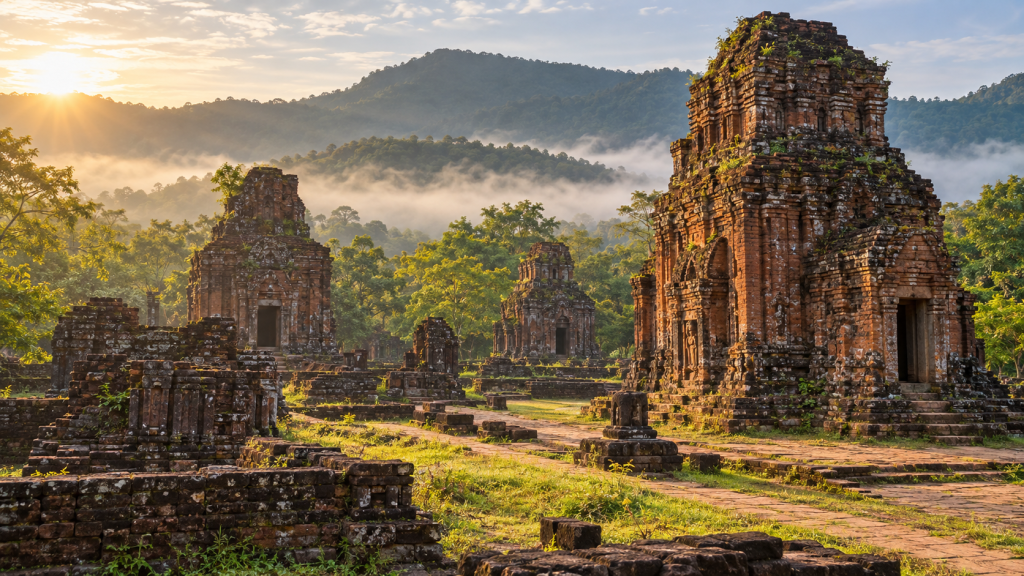
What should you pay attention to at My Son?
Start with the relationship between the towers and their setting. My Son was not placed in a busy town centre. The surrounding basin helps convey the site’s sacred character, and it changes how you experience each building. Listen to the sounds around you, leave room between stops, and resist the temptation to judge the visit solely by the number of towers you photograph.
Next, study the materials. The fired brick gives the buildings their distinctive colour and texture, but the details are easily missed in a wide photograph. Doorways, wall surfaces, decorative fragments, and surviving reliefs provide clues to the skill involved in building and embellishing the complex. UNESCO highlights both the engineering of the structures and the religious imagery associated with them. UNESCO World Heritage Centre
Finally, ask how the site is cared for today. Conservation is an ongoing responsibility, and it affects where visitors may walk and how closely they can approach a monument. Follow marked routes and current staff instructions, even when an apparently open area would offer a tempting camera angle. A respectful visit protects the details that make My Son worth visiting.
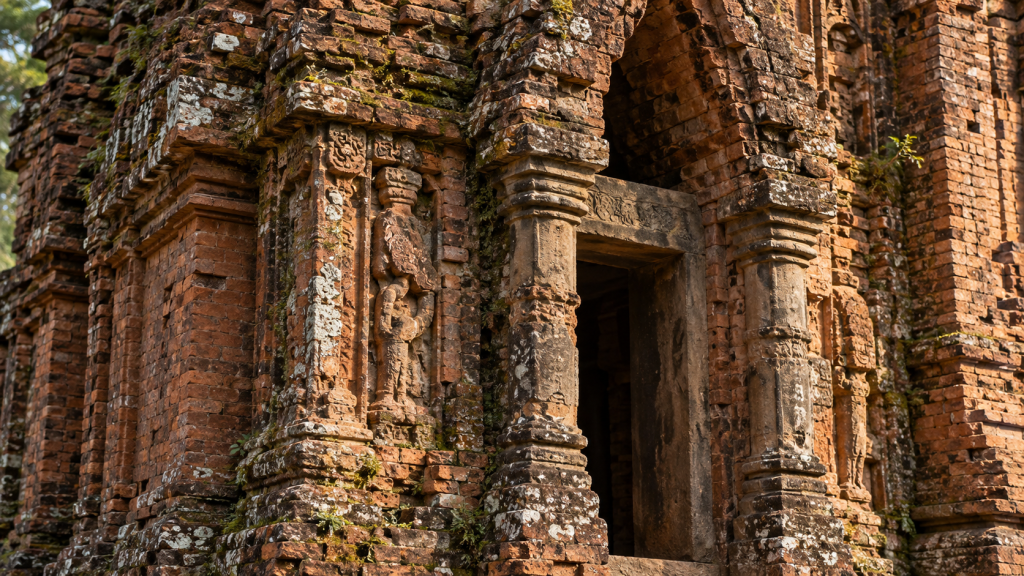
From My Son to Hoi An: make the journey part of the plan
The transfer is the hinge of the day. Travellers sometimes build an itinerary around the time spent at the sites and forget to allow for getting between them, leaving the archaeological area, finding lunch, and entering Hoi An’s historic core on foot. Keep a buffer in your schedule. A little flexibility makes it easier to enjoy an extra stop at My Son or a longer lunch without losing your entire afternoon in Hoi An.
A private vehicle offers the greatest control over departure time, luggage, breaks, and where the day ends. A shared tour may be simpler to book, but you should check its actual schedule: some products described as a “My Son and Hoi An tour” provide only a short Hoi An stop or end before evening. Independent travellers can arrange transport separately, though they must coordinate each leg and decide what to do with bags. Compare the complete itinerary rather than the headline price alone.
If your main goal is a dedicated temple excursion and you already have another day for the town, read the related Hoi An to My Son Sanctuary guide and consider keeping the visits separate. The combined route is most valuable when you genuinely want both heritage experiences in one day. Spending less time in a vehicle is useful, but it should serve a day that still feels enjoyable. When comparing a My Son – Hoi An tour, check how much time the transfer leaves for the ancient town.
Hoi An Ancient Town: slow down after the temple visit
The second half of a My Son – Hoi An tour is best enjoyed on foot. After the open landscape of My Son, Hoi An invites a closer, slower walk. UNESCO identifies its surviving street pattern and traditional wooden buildings as central to its significance as a historic trading port. Rather than heading straight for a single photo spot, choose a manageable route through the old town. Notice how houses address the street, how courtyards and interiors differ from their façades, and how the river shaped the town’s commercial life. UNESCO World Heritage Centre
Leave enough time for at least one heritage attraction that interests you. A historic house, assembly hall, or museum can add depth to the streetscape outside. Entry arrangements and the attractions included in a sightseeing ticket may change, so check the current official information when planning. If a tour claims that every admission is covered, ask which entrances are included rather than assuming the walking portion and ticketed sites are the same thing.
Hoi An also rewards unstructured time. Step away from the busiest stretch, examine architectural details, and take a break when you need one. You do not have to fill every minute with a named attraction. A relaxed walk can reveal why the town’s heritage is more than a preserved backdrop: its traditional buildings and street plan remain part of an active place. That living character is a major reason the afternoon feels so different from the morning at My Son.
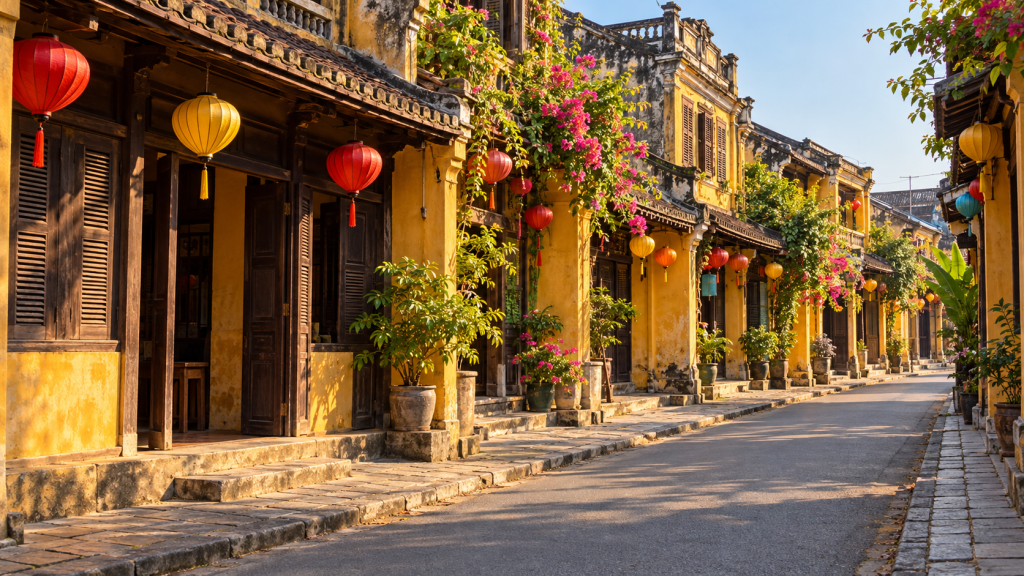
Should you stay in Hoi An until evening?
If your schedule permits, yes. Staying longer gives the combined itinerary a more satisfying finish. You can use the late afternoon for buildings and streets, stop for dinner, and then return to the river when the light changes. This progression provides a fuller impression of Hoi An than a brief arrival, a single photograph, and an immediate departure.
Evening can also be busy. You may prefer a quieter stretch of the waterfront or a short pause at a café instead of trying to cover every lantern-lit street. Travellers who enjoy photography should consider both light and comfort: the busiest viewpoint is not always the best place to experience the town. If you need to return to Da Nang or another destination, agree on a realistic meeting point and departure time before your driver leaves you to explore.
Treat optional evening activities as choices, not essential parts of every tour. Boat rides, performances, shopping, and workshops may appeal to different travellers, and availability or prices can vary. What matters most for this itinerary is that your Hoi An visit has a clear purpose and enough unscheduled time for the town to leave an impression.
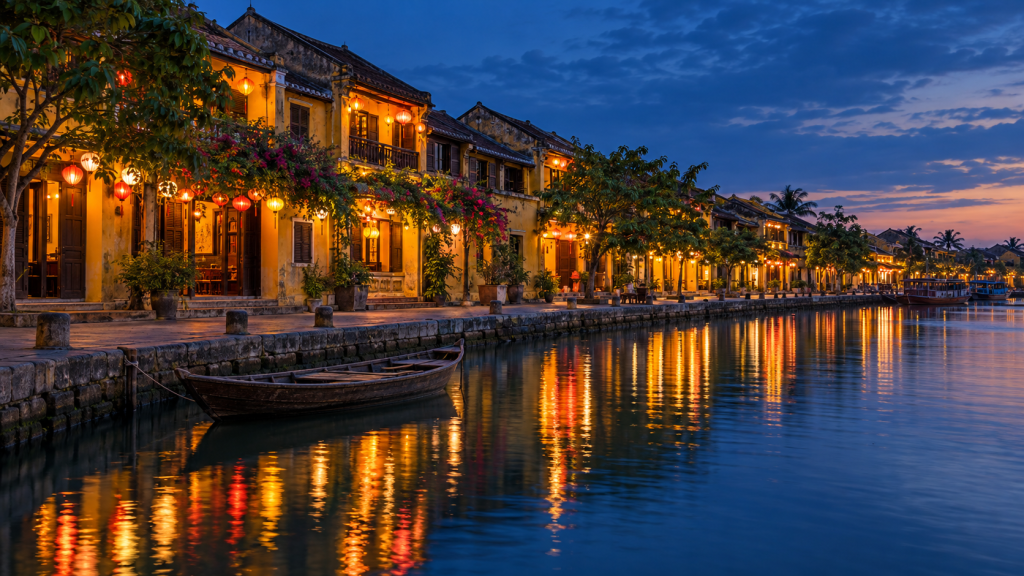
A practical one-day My Son – Hoi An tour itinerary
Morning: travel to My Son and explore the temple groups
Use the following My Son – Hoi An tour itinerary as a flexible guide rather than a fixed timetable. Depart at a time that gives you a comfortable morning at the sanctuary. On arrival, check the current visitor route and decide whether you want an introductory explanation before walking farther. Concentrate on several temple groups and the spaces between them instead of racing from structure to structure. Leave room for photographs, water, and a rest in the shade. If cultural performances are important to you, confirm the current programme directly with the site or your operator; schedules can change and weather may affect them.
Midday: transfer and lunch
Plan lunch around the pace of the group. A meal before Hoi An can give you a clear break between the two heritage visits. Alternatively, travel onward and eat after arrival if you want more flexibility in town. Confirm any dietary needs when booking, especially if the package specifies a fixed restaurant or set menu. A useful itinerary states whether lunch is included, where it is likely to take place, and whether the timing can shift.
Afternoon: heritage walk in Hoi An
Begin with one or two attractions that match your interests, then allow time simply to walk. Ask your operator where the vehicle will stop and how much of the old town you will cover on foot. The pedestrian arrangements in the historic area make a clear pickup plan helpful, particularly if your group includes children or travellers who prefer shorter walks. Current town information and any admission requirements should be checked shortly before the visit.
Evening: dinner, riverfront, and departure
If your tour includes evening time, decide whether to have dinner in Hoi An or travel after the afternoon walk. Give yourself a final unhurried stretch by the river. Before the day begins, confirm the return destination, pickup location, and whether waiting time after dinner is included in the quoted service. These details make a greater difference to your experience than a crowded list of optional stops.
A private My Son – Hoi An tour suits travellers who want to control the pace. It can be particularly useful when interests within the group differ: one person may want more time examining temple architecture, while another hopes to stay in Hoi An for dinner. Ask whether the schedule can actually be adjusted on the day and whether changes affect the price. “Private” should describe more than the vehicle; it should give you a clear understanding of the time and services reserved for your group.
A shared tour can work well when its published route matches your priorities. Check group size, start and end points, time allocated at each site, and whether the Hoi An portion is guided or free time. A low initial price is hard to assess without knowing which admissions, meals, and transfers it covers. If evening in Hoi An matters to you, verify that the tour runs late enough to include it.
Independent travel gives you freedom to choose every stop, but you take responsibility for connections and timing. Think through the whole day before committing: how you will reach My Son, how you will continue to Hoi An, and how you will get back afterward. Also decide whether you would benefit from historical interpretation at the sanctuary. The right choice depends on whether your priority is cost, flexibility, convenience, or a deeper explanation of the sites.
What to check before booking
Before booking a My Son – Hoi An tour, compare the full list of inclusions. Request a written itinerary that names the pickup and drop-off points, the expected time at My Son, and the amount of time available in Hoi An. Confirm whether the package includes transport, admission to My Son, any Hoi An heritage attraction tickets, meals, and a guide where applicable. Ask about the vehicle if comfort or luggage space matters to your group. Avoid assuming that a photograph of an attraction means entry to it is included.
Ask what happens if the weather changes. Much of a My Son visit takes place outdoors, while rain can also affect your preferred walking route in Hoi An. A useful operator should explain how the schedule can be adjusted, what remains available, and whether any prepaid activity has separate conditions. Pack comfortable footwear, drinking water, sun or rain protection as appropriate, and a way to keep your camera or phone dry.
Finally, decide what would make the day successful for you. If you want extensive archaeological interpretation and a long museum visit, one combined day may feel tight. If you want an informed introduction to My Son followed by a generous first experience of Hoi An, the route can work beautifully. Be candid about that preference when arranging the tour. A good itinerary is shaped around the time you want to spend at each place.
Is a My Son – Hoi An tour worth it?
For many first-time visitors, the answer is yes. The two sites are historically distinct, visually memorable, and close enough to form a coherent heritage day when transport and pacing are planned carefully. The strongest itinerary begins with attention to My Son’s temples and landscape, then gives Hoi An enough afternoon and evening time to feel like a destination in its own right.
If you are comparing options, start with the full schedule and inclusions. Choose the My Son – Hoi An tour that gives you meaningful time at both sites, a clear return plan, and the flexibility your group needs. You will come away with more than two sets of photographs: you will have seen how sacred architecture and a historic trading town tell different, connected stories of central Vietnam.
Q&A
Can you visit My Son and Hoi An in one day?
Yes. A one-day visit is practical with a planned transfer and a selective route at each site. Start at My Son and reserve the afternoon, and preferably some evening time, for Hoi An. Travellers seeking an in-depth visit to both may prefer separate days.
Is My Son the same kind of site as Hoi An Ancient Town?
No. My Son is an archaeological sanctuary known for Cham temple architecture. Hoi An is a historic trading town whose street layout and traditional buildings remain part of a living urban area. Their differences are the main reason to combine them.
Do I need a guide at My Son?
A guide can help explain the temple groups, religious context, and conservation history. You can also visit independently, provided you follow the marked visitor route and take time to read the available site information.
Are entrance tickets and lunch included in every combined tour?
No. Inclusions depend on the operator and package. Confirm admission for each site or attraction, meals, transport, and any guiding service in writing before booking.
Where should the tour end?
That depends on your onward plans. Travellers staying in Hoi An may prefer to finish there after dinner. Others may need a return transfer. Confirm the exact drop-off point and departure time when you book.
Publishing note: The five images above were generated for this article. They are illustrative images, so check architectural details before presenting them as documentary photographs of specific surviving structures. Export them to the suggested dimensions and verify the cover title remains legible after cropping.