


Best Hoi An Street Food Tour: Night Market Secrets

When the sun sets, the ancient town transforms into a vibrant culinary hub. Finding the best Hoi An street food tour is the ultimate goal for any traveler visiting this magical place. While the lantern-lit streets are romantic, navigating the Nguyen Hoang Night Market requires savvy local knowledge to find the real hidden gems.

Whether you are an adventurous foodie or a cautious eater, a Hoi An street food tour is the absolute best way to dive into the heart of Central Vietnamese culture. Let’s embark on a journey through the narrow alleyways and bustling market stalls to uncover the night market secrets that only the locals know.
The Culinary Heritage of Hoi An: A Melting Pot of Flavors
Before you take your first bite, it is essential to understand why Hoi An’s food scene is so profoundly different from Hanoi in the North or Ho Chi Minh City in the South. From the 15th to the 19th century, Hoi An (then known as Faifo) was one of the most prominent trading ports in Southeast Asia.
Merchants from Japan, China, Portugal, and France settled here, bringing their native ingredients, cooking techniques, and culinary philosophies. Over centuries, the ingenious local Vietnamese cooks absorbed these foreign influences, adapting them with regional herbs, spices, and the pristine water of local ancient wells. The result? A distinct, fusion-rich cuisine that you simply cannot find anywhere else in the world. When you embark on a Hoi An street food tour, you are literally tasting hundreds of years of trading history.
Unlocking the Secrets of a Hoi An Street Food Tour
If you are planning a self-guided Hoi An street food tour, timing, location, and strategy are everything. The market truly comes alive just as the sun dips below the Thu Bon River, but the peak hours for hardcore food lovers are between 6:30 PM and 8:30 PM.
The atmosphere is electric. You will be greeted by a sensory overload: the sharp clinking of metal spatulas against hot woks, the irresistible, smoky aroma of char-grilled pork belly, the vibrant colors of fresh tropical fruits, and the multilingual chatter of travelers from around the globe.
Local Insight: Here is a massive secret from the locals—do not stop at the very first food stalls positioned right at the An Hoi bridge entrance. These prime-location spots often cater specifically to tourists, featuring inflated prices and sometimes “watered-down” flavors. Instead, exercise a little patience and walk further down the main street, or better yet, veer into the smaller intersecting alleyways.
Look for spots where the charcoal smoke is thicker, the menus are only in Vietnamese, and the tiny plastic stools are filled with local families and teenagers. That’s where the authentic, reasonably-priced culinary magic happens. At these hidden gems, you can expect to spend only around 30,000 to 50,000 VND (roughly $1.25 – $2.00 USD) for a mouth-watering, generously portioned dish.
Navigating the market also means understanding the layout. The food section is typically concentrated towards the center and the far end of the Nguyen Hoang street, away from the clothing, leather goods, and lantern stalls. Keep your eyes peeled for vendors who specialize in only one or two specific dishes. In Vietnamese street food culture, a limited menu is usually a guarantee of mastery passed down through generations.
7 Must-Eat Street Foods After Dark (Beyond the Tourist Traps)
While walking through the night market, you will be tempted by countless brightly lit food carts selling generic fried rice, rolled ice cream, and mango smoothies. However, to truly experience a Hoi An street food tour like a true insider, you need to know exactly what to look for. Forget the generic international snacks and focus your appetite on these seven iconic, regional specialties that define the town’s gastronomic identity.
1. The Iconic Banh Mi: A staple in every Hoi An street food tour. (Phuong vs. Madam Khanh)
Hoi An is globally recognized as the banh mi capital of Vietnam, and absolutely no Hoi An street food tour is complete without tasting this iconic Vietnamese-French sandwich. While Banh Mi Phuong gained skyrocketing global fame thanks to the late, great Anthony Bourdain (who called it a “symphony in a sandwich”), locals often passionately debate whether Madam Khanh (affectionately crowned “The Banh Mi Queen”) holds the superior recipe.
Try both to decide for yourself! Phuong’s banh mi is known for its robust, meat-heavy style, complex layers of pate, and a distinctively light, shattering-crisp baguette. Madam Khanh’s version, on the other hand, wins hearts with her perfectly balanced, closely guarded secret sauce and incredibly tender char siu (roast pork). The beauty of an evening food tour is that you can grab a banh mi cut in half to share as a walking appetizer before diving into the heavier, sit-down dishes.

These delicate, translucent, and incredibly photogenic dumplings are a culinary treasure unique to Hoi An. Carefully filled with spiced minced shrimp or pork, the dough is artfully pinched and shaped to resemble blooming white roses. They are steamed to perfection, topped with a generous sprinkle of crispy fried shallots, and served with a mild, sweet and sour dipping sauce made from fish sauce, sugar, and lime.

Local Insight: The secret to their unique, slightly chewy texture and translucent appearance lies in the dough. Traditionally, the rice flour must be mixed with water drawn exclusively from the ancient Ba Le Well, located right in the old town. Furthermore, nearly all the White Rose dumplings sold in Hoi An—even in luxury hotels—are supplied by a single local family (the Tran family) who has kept the exact recipe a closely guarded secret for over three generations.
3. Authentic Mi Quang: Best enjoyed by the Thu Bon River.
Unlike standard Vietnamese noodle soups like Pho or Bun Bo Hue, Mi Quang features a very minimal amount of intensely flavored, turmeric-infused pork and bone broth. It’s meant to coat the bottom of the bowl and act as a rich sauce rather than drown the noodles.

The dish is built on a base of wide, flat rice noodles, topped with tender braised pork, shrimp, quail eggs, and a generous handful of fresh local herbs, shredded banana blossoms, and roasted crushed peanuts. The crowning glory is a large piece of crispy sesame rice cracker (banh trang), which you are supposed to break into smaller pieces and mix into the bowl for an incredible crunch. Grab a bowl from a riverside vendor, sit on a small red plastic stool, and enjoy this symphony of textures while watching the illuminated lantern boats glide along the dark water.
4. Cao Lau: The mythical noodle you can’t miss on a Hoi An street food tour.
You absolutely cannot claim to have completed your culinary adventure without trying Cao Lau. It is the defining, undisputed signature dish of Hoi An. These thick, chewy noodles (bearing a striking resemblance to Japanese udon) are served with thin slices of Chinese-style five-spice roast pork (char siu), a massive pile of fresh local greens (like bitter mint and baby mustard leaves), and crispy square croutons made from dried Cao Lau dough. All of this sits atop a spoonful of savory, dark soy-based pork gravy.

The dish beautifully embodies the town’s trading port history, combining Japanese noodle textures, Chinese flavoring techniques, and Vietnamese fresh herbs into one bowl. True Cao Lau noodles are legendary because they can only be made using water from the Ba Le well, mixed with lye ash created from specific trees grown on the nearby Cham Islands. This strict, location-specific requirement makes it almost impossible to replicate authentic Cao Lau outside of Hoi An city limits.
5. Sizzling Banh Xeo: The most interactive dining experience.
Follow the loud sound of sizzling batter and the earthy aroma of turmeric to find an authentic Banh Xeo stall. These crispy, savory, bright yellow crepes are rapidly cooked in small, hot woks and stuffed with fatty pork, whole shrimp, and fresh bean sprouts.

The true local way to eat them is a highly interactive, hands-on experience. The vendor will serve you the hot crepe along with a stack of thin, dry rice paper and a massive basket of herbs. You tear off a piece of the hot, oily crepe, place it on the rice paper, add fresh mustard greens, lettuce, and basil, roll it up tightly like a cigar, and then dip the entire roll into a rich, warm, tangy peanut and pork liver sauce (nuoc tuong). It’s a messy, incredibly fun, and unforgettable dining process.
6. Nem Lui: Smoky char-grilled perfection.
Often sold right next to Banh Xeo stalls (and frequently eaten together), Nem Lui is an absolute crowd-pleaser. These are savory skewers made from finely minced pork, marinated in garlic, sugar, and fish sauce, and then molded around stalks of fresh lemongrass before being slow-grilled over hot charcoal.

The lemongrass infuses the meat from the inside out as it cooks, creating a phenomenal aroma that wafts down the street. Similar to Banh Xeo, you slide the grilled meat off the lemongrass stick, wrap it in rice paper with fresh veggies, and dip it into the same magical peanut liver sauce.
7. Com Ga (Chicken Rice): A hearty end to your culinary journey.
If you need something hearty and comforting to settle your stomach, look for Com Ga. While chicken rice exists everywhere in Asia, Hoi An’s version is distinct. The rice is cooked in rich chicken broth with a dash of turmeric, giving it a beautiful golden-yellow hue and a savory depth.

It is topped with free-range chicken that has been boiled, shredded, and tossed with zesty lime juice, crushed onions, black pepper, and fragrant Vietnamese coriander (rau ram). Served with a side of sharp green papaya slaw and a small bowl of chicken soup, it is a masterclass in balancing rich, acidic, and fresh flavors.
Sweet Endings: Local Desserts and Beverages
After indulging in heavily spiced and savory delights, a proper Hoi An street food tour requires a refreshing, sweet conclusion. The night market and surrounding streets offer several traditional treats that you shouldn’t miss.
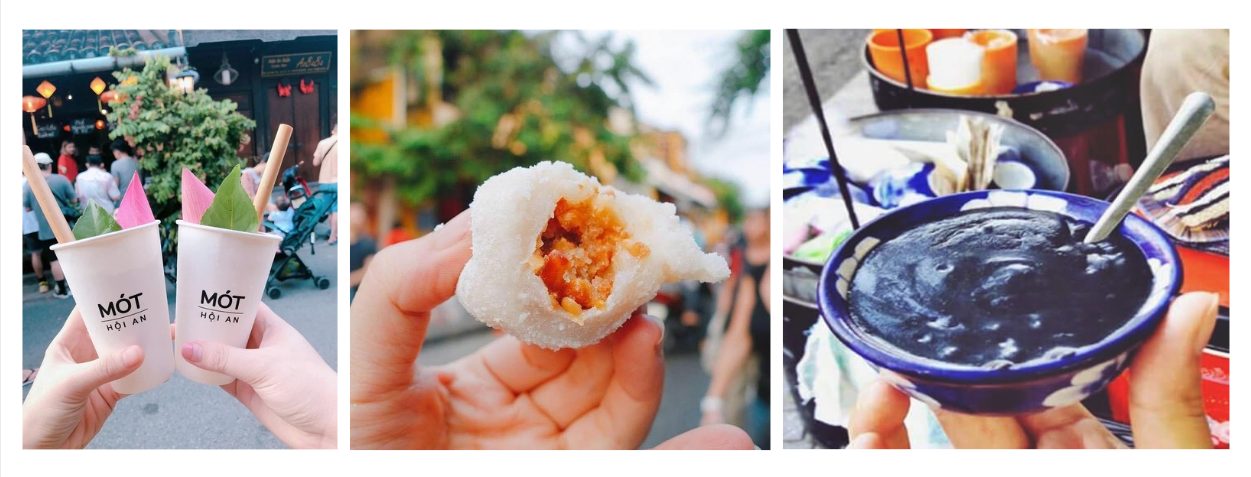
- Mot Herbal Tea (Nước Mót): If you are thirsty, look for the vendor with a giant lotus petal display and a long line of people. Mot is a traditional, iced herbal tea infused with lotus petals, lemongrass, ginger, green tea, and lime. It is lightly sweetened and incredibly refreshing—the perfect palate cleanser after a heavy meal.
- Traditional Sweet Soup (Chè): Look for older women sitting behind large metal pots filled with colorful liquids. Che Thung (sweet taro and coconut soup), Che Bap (sweet local corn pudding), and Che Troi Nuoc (glutinous rice balls filled with mung bean paste in a warm ginger syrup) are excellent, comforting choices.
- Mango Cake (Bánh Xoài): Ironically, this small, white, powdered dumpling contains absolutely no mango! It gets its name simply because its shape resembles a mango seed. Inside the soft, sticky rice exterior is a delightful, crunchy mixture of crushed peanuts and brown sugar.
Practical Tips for Surviving a Self-Guided Tour
If you choose to tackle the night market without a guide, keep these practical survival tips in mind to ensure a smooth and stomach-friendly evening:
- Pace Yourself: The biggest mistake tourists make is getting full at the very first stall. A food tour is a marathon, not a sprint. Buy one portion of a dish and share it with your travel partner so you have room to taste 5 or 6 different things throughout the night.
- Bring Small Cash: Street food vendors rarely accept credit cards, and trying to break a 500,000 VND note for a 30,000 VND bowl of noodles will cause frustration. Bring a stack of 10,000, 20,000, and 50,000 VND bills.
- Hygiene Essentials: Night market eating is a rustic affair. Tables can be sticky, and you will be eating with your hands. Always bring your own packet of wet wipes and a small bottle of hand sanitizer.
- Embrace the Low Stools: Don’t be intimidated by the tiny, kindergarten-sized plastic chairs. Sitting low to the ground, shoulder-to-shoulder with locals, is 50% of the authentic Vietnamese dining experience.
How to Choose the Best Hoi An Street Food Tour
While wandering the lantern-lit streets on your own is undeniably fun and spontaneous, booking a professional, guided Hoi An street food tour elevates your evening from simply “eating dinner” to truly understanding the depth of Central Vietnamese culture. But with dozens of tour operators aggressively handing out flyers on the street, how do you pick the right one?
First and foremost, prioritize tours led by fluent English-speaking, locally-born guides. A great guide is not just a food fetcher; they act as your cultural bridge. They will explain the fascinating, centuries-old history behind each bite, teach you the correct dipping and rolling etiquette, and most importantly, ensure strict food safety standards. If you have dietary restrictions, gluten allergies, or are a strict vegan, having a knowledgeable local by your side is absolutely essential to communicate your needs clearly to the vendors, ensuring a safe and stress-free evening.

Local Insight: Avoid massive group tours (15+ people) that herd tourists into large, brightly lit, generic restaurants holding “street food style” buffets. That is entirely fake. Look for intimate, small-group (maximum 6-8 people), or private walking experiences. Small groups are the only ones that can physically fit into the hidden, narrow alleyways and sit at the tiny stalls where the true, multi-generational food masters operate. A high-quality tour should feel less like a commercial excursion and more like a local foodie friend showing you their favorite, secret neighborhood hangouts.
Your Ultimate Culinary Adventure Awaits
Tasting the vibrant, complex street food of this ancient trading port is an immersive experience that will linger in your memory long after your flight back home. From the mesmerizing, colorful glow of the silk lanterns reflecting on the Thu Bon River to the irresistible, savory crunch of a perfectly crafted Banh Xeo, every single moment here is a spectacular feast for the senses. It is a deep, delicious dive into the very soul of Vietnam.
Why leave your precious culinary journey to chance, risk getting lost in the crowds, or fall into overpriced, inauthentic tourist traps? Let our passionate team of local food experts guide you through the chaotic, delicious maze of the night market. If you are ready to step off the beaten path, eat exactly like a true local, learn the fascinating stories behind the recipes, and discover the old town’s best-kept gastronomic secrets, book a Hoi An Food Tour with phoebeandbesties today. Your taste buds will thank you!