



Hanoi Street Food Tour: A Walkable Old Quarter Tasting Route
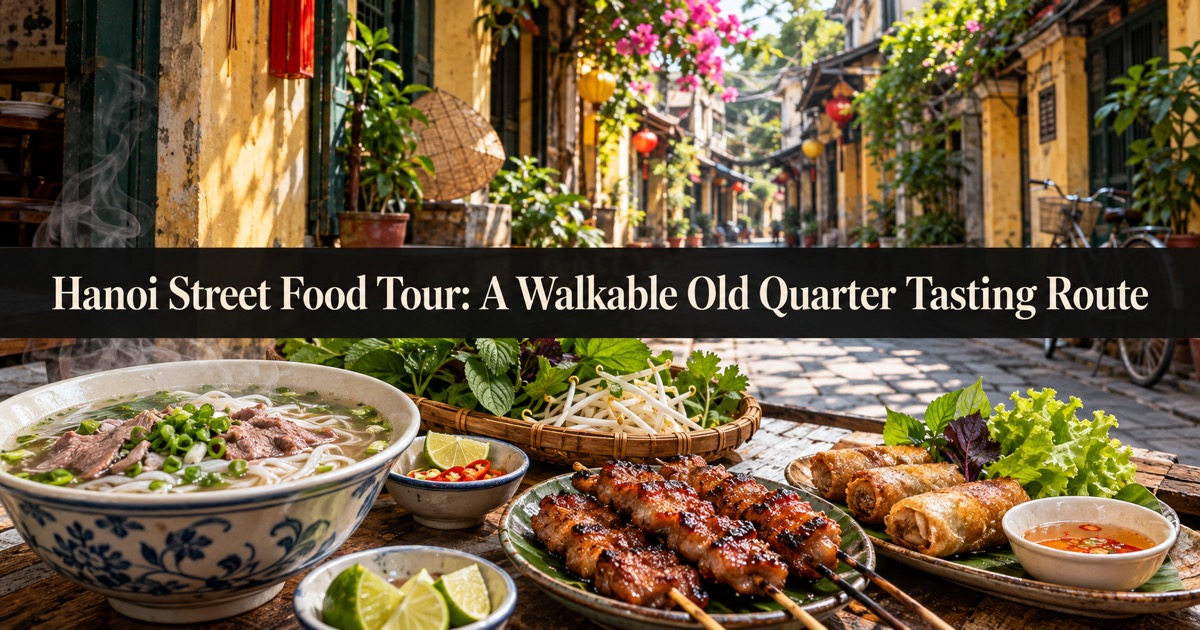
A Hanoi street food tour works best when it feels like a walk through a living neighborhood rather than a race between famous dishes. The Old Quarter is compact enough to make a satisfying tasting route on foot, yet its lanes, crossings and small eateries reward careful planning. This guide gives you a flexible route structure: where to begin, how to pace four or five stops, what to ask at each counter and when a local guide adds real value.
The route is deliberately adaptable. Individual vendors change hours, sell out or close for family reasons, so a rigid list of “must-visit” addresses can disappoint. The better approach is to choose the type of dish for each stage and keep a nearby alternative. If you are still deciding whether to book a guide at all, read our broader Hanoi food tour guide first. This article goes deeper on the walking sequence and the choices that make it enjoyable.
What makes an Old Quarter route work?
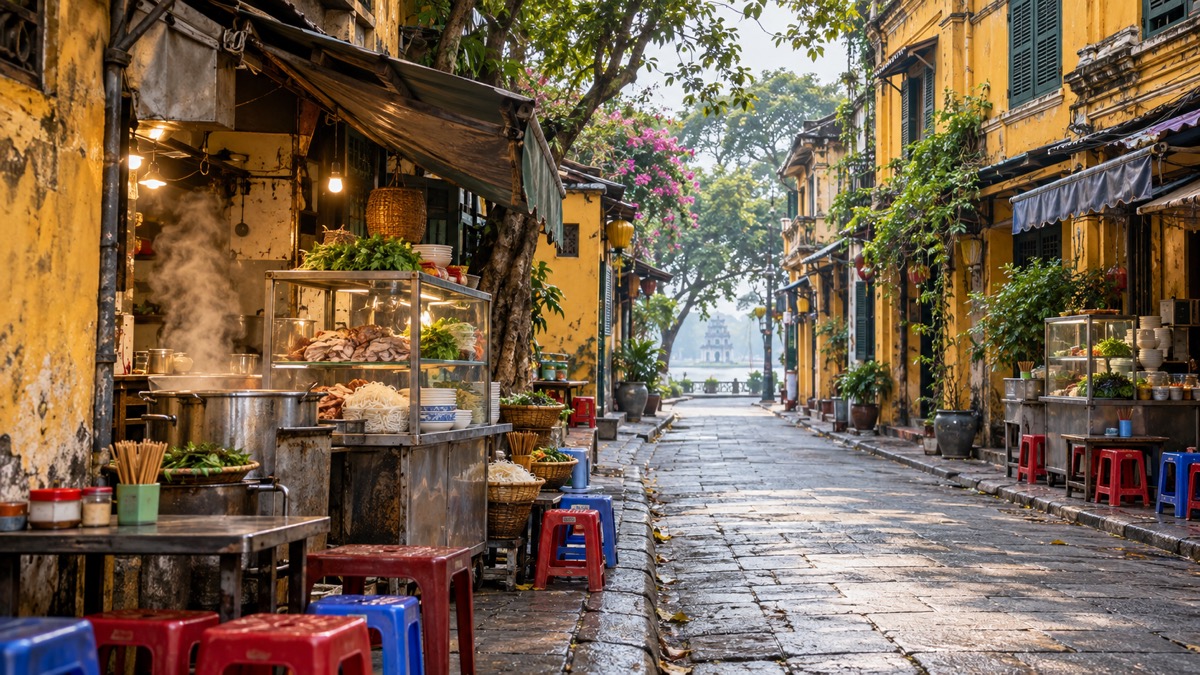
Start with a clear meeting point near Hoan Kiem, then move through a compact set of lanes rather than chasing a viral stall across town. Alternate hot and cool foods, substantial dishes and lighter bites. Leave time to sit. A route with fewer thoughtful stops is usually better than one with seven rushed samples. The official Vietnam Tourism guide describes the Old Quarter as a walkable area with specialist food shops and cafés; the food is part of its streetscape, not separate from it.
Allow extra time for crossings, ordering and waiting. Sidewalks may be shared with parked motorbikes or shop activity, so a short map distance is not the same as an easy walk. Groups should agree on a meeting point if someone gets separated. A guide can manage this flow, but an independent traveler can also do well by setting a comfortable pace and selecting a compact loop.
Before the first stop: choose the right time
Morning is good for a breakfast bowl and a quieter start, but some lunch-focused foods will not be available yet. Midday can suit bún chả, which Vietnam Tourism describes as traditionally associated with lunch, though heat may make long outdoor walking less pleasant. Early evening brings livelier streets and a dinner atmosphere, but popular lanes may be crowded. Choose the time around the dishes you care about rather than assuming every stall serves all day.
Check opening hours close to your travel date, and ask a guide what changes if a chosen vendor is closed. If you have a same-day flight, leave a margin for immigration, traffic and check-in. If you have an onward train, do not book a food walk that ends just before you must leave. The best part of street food is taking time to notice the neighborhood, and a tight schedule removes that pleasure.
Stop one: a bowl that introduces Hanoi
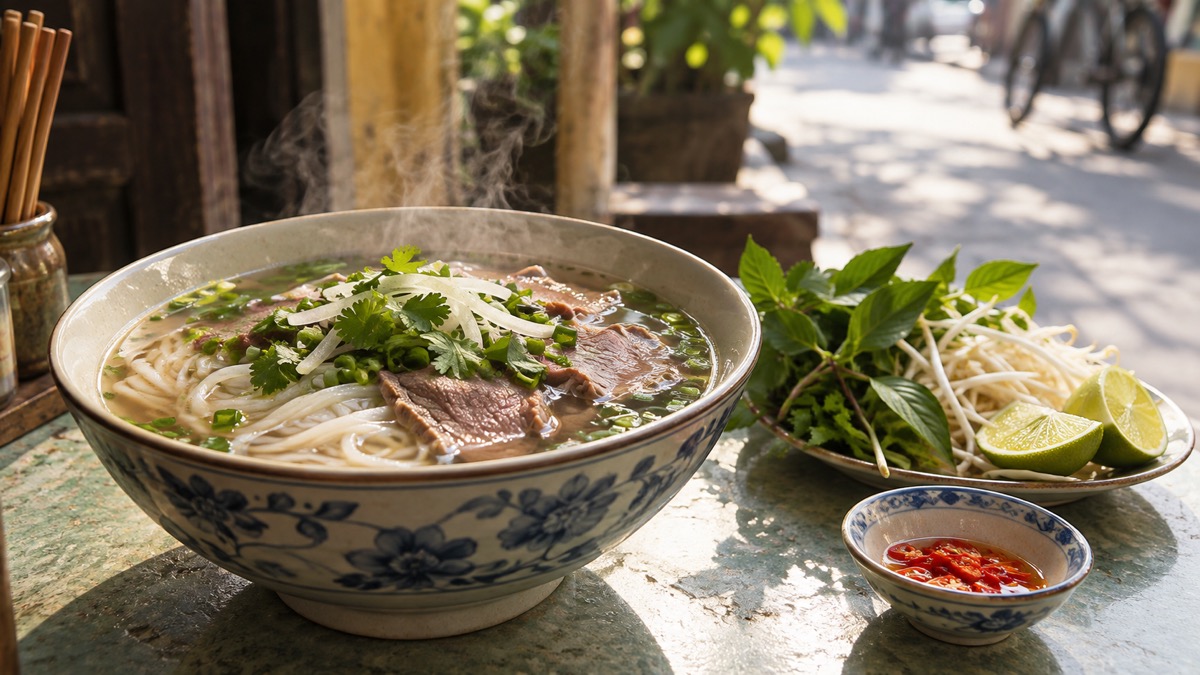
Phở is a natural opening course because a hot broth gives you a point of comparison for the foods that follow. Taste the broth before adding condiments. Notice the noodles, herbs, meat or alternative topping, and how the vendor balances the bowl. Ask whether the broth contains meat if you need a vegetarian meal. A bowl with vegetables is not automatically vegetarian. If you are eating several courses, consider sharing a portion where the vendor permits it.
Do not turn the first stop into an argument about the single “best” phở shop. Many kitchens have loyal local customers and distinct styles. Choose a stall that is open, handles food carefully and fits your route. Ask what makes its version distinctive. The learning comes from tasting with attention, not from collecting a famous name.
Stop two: a lighter contrast
After a noodle bowl, shift to a smaller dish rather than another full meal. Green papaya salad with beef jerky, rice rolls or a local snack can introduce a different texture. Vietnam Tourism highlights nộm bò khô in the Old Quarter, but ingredients and service vary by stall. Ask about peanuts, fish sauce and meat if you have restrictions. A small second course leaves enough appetite for the centerpiece of the walk.
If you are with a group, use this stop to check the pace. Are people still hungry, or are they already full? Can everyone hear the guide? Are crossings comfortable? A good food tour changes speed before the group becomes tired. Independent walkers can make the same adjustment by pausing for water and deciding whether the next stop should be savory or sweet.
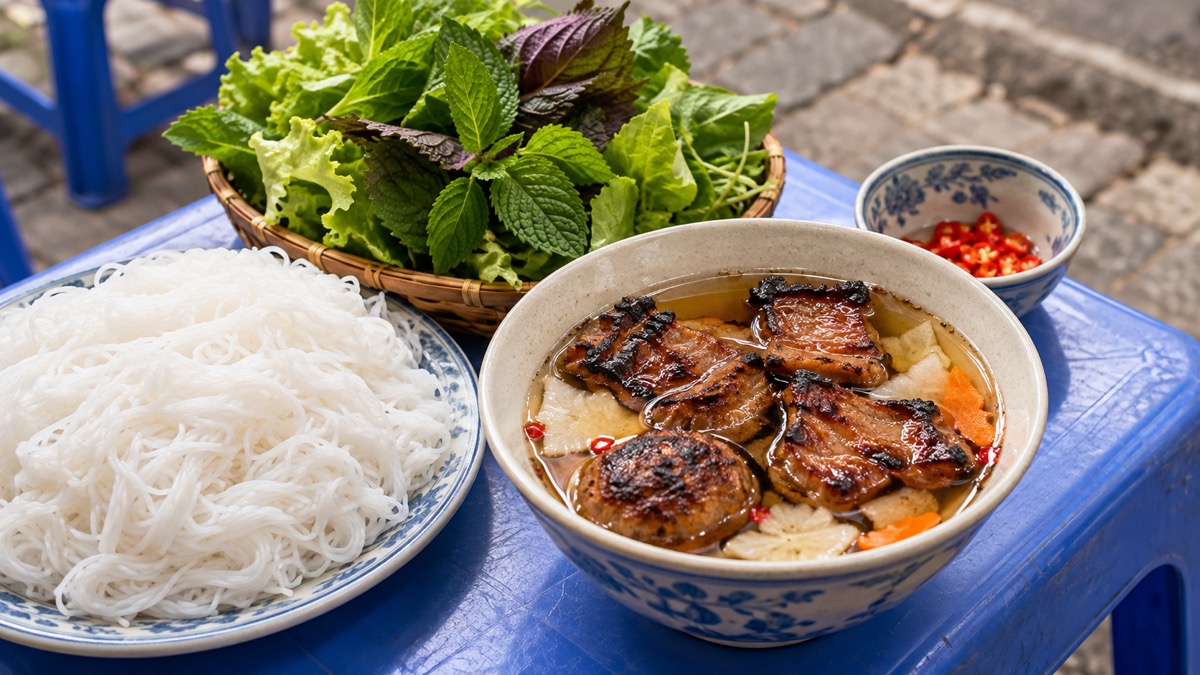
Stop three: bún chả at the right moment
Bún chả is a strong centerpiece for a midday route. Grilled pork, rice vermicelli, herbs and a dipping sauce arrive as a set of components. The mix of smoke, fresh leaves and sauce differs from the broth-focused start. Ask the guide or vendor how they like to combine the noodles and herbs. Taste first, then adjust. If you do not eat pork, arrange an alternative before the walk, because a substitution is not always simple at a specialist stall.
Give this stop enough time to sit. Street food can be quick, but eating bún chả thoughtfully is more enjoyable than standing over a bowl while checking the next map pin. Ask what is included in the sauce and whether extra fried rolls are part of your tour price. A clear inclusion list prevents small surprises at checkout.
Stop four: choose one specialty, not every specialty
The fourth stop is where a route becomes personal. Choose chả cá if you want a longer seated dish with fish, herbs and noodles. Choose bánh mì if you want a portable bite and a shorter pause. Choose bánh gối or another savory snack if you want to sample something smaller. You do not need all three. The purpose of this stop is to add contrast to the dishes you have already eaten, not to prove that you can fit every Hanoi food into an afternoon.
Ask the guide why that dish was chosen and what makes it part of Hanoi’s food story. A good explanation includes ingredients and how the dish is eaten, while acknowledging that recipes vary. If you are self-guided, read a little about the dish before ordering and observe how customers use condiments. Avoid photographing staff or diners without permission. Respect for the small businesses on your route matters as much as a good picture.
Stop five: finish at a café
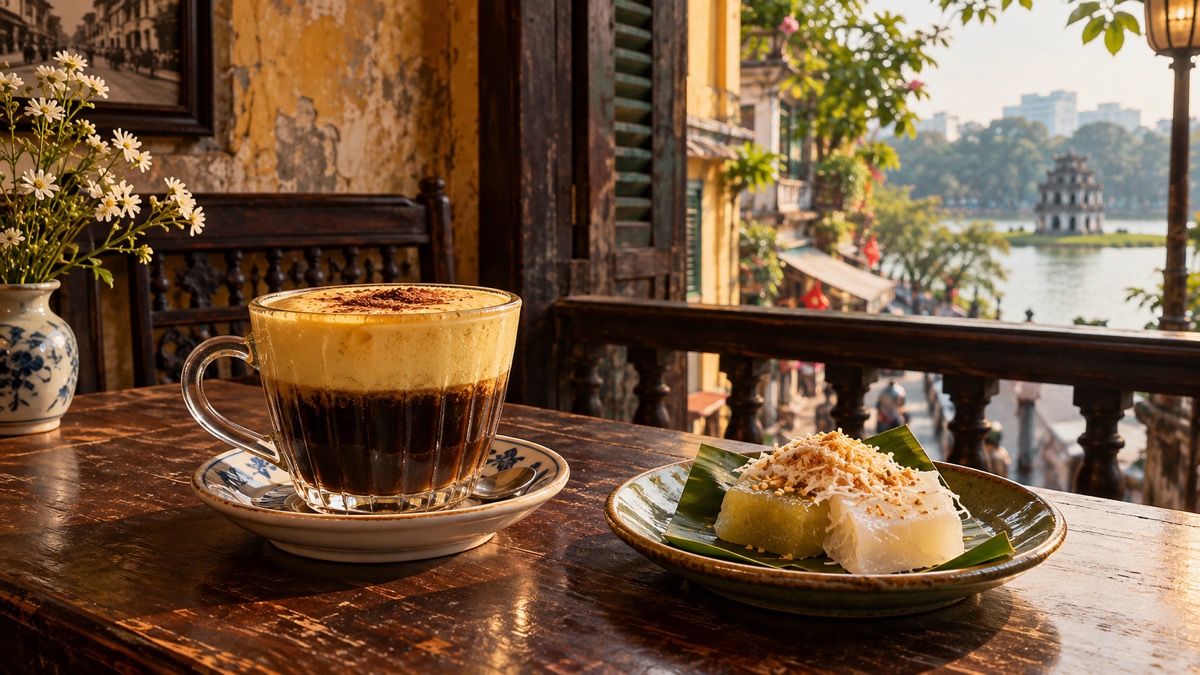
Egg coffee is a fitting close for many visitors. The strong coffee and creamy egg topping are rich, so a small serving can be enough after a full walk. Check the ingredients if you avoid egg, dairy or caffeine. A sweet soup, seasonal fruit or another local drink can also make a good final stop. Sit down long enough to review the dishes you liked and note any places you would return to.
The official Old Quarter guide points to long-standing cafés, but their seating and hours can change. A guide should have an alternative if the intended stop is full. Independent travelers should be equally flexible. The best café may simply be the one with a comfortable seat when your group is ready to pause.
How far should you walk?
For most first-time visitors, a compact route is easier than trying to cover every part of the Old Quarter. The exact distance depends on vendor locations and detours, so ask the operator for a realistic estimate rather than a vague “short walk.” Consider sidewalks, steps, seating and restroom stops, particularly with children or anyone with mobility concerns. A tour that walks a little less can still show you more if the guide uses the time well.
Build in a clear start and finish point. If your hotel is nearby, ask whether the tour ends within comfortable walking distance. If you need a car afterward, confirm where it can collect you; some Old Quarter lanes are easier to reach on foot than by vehicle. A route is only truly convenient when the final handoff is planned too.
Guided tour versus self-guided route
A guided walk is useful when you want translation, context and someone to manage the practical sequence. A strong guide should explain why each stop fits the route, order for the group, communicate dietary needs and adapt when a vendor is closed. Ask how many people are in the group and whether tastings add up to a meal. A high number of stops does not guarantee good value.
A self-guided walk gives you complete flexibility. You can skip a food you do not enjoy, stay longer at a café and choose your own budget. The trade-off is that you must verify opening hours, communicate restrictions and handle navigation. If you have more than one day in Hanoi, consider a guided introduction followed by a self-guided return to the dishes you enjoyed most.
Questions to ask before booking a street food tour
- How many guests? Compact eateries can struggle with a large group.
- What is included? Check food portions, drinks, guide service and pickup.
- Where is the meeting point? Make sure you can find it without rushing.
- How far is the walk? Ask about stairs, seating and restrooms.
- What if a vendor closes? Look for a thoughtful alternative plan.
- Can dietary needs be handled? Ask for specific substitutions and preparation details.
Read recent, detailed reviews. Look for comments about guide knowledge, pace, portion size and how changes were communicated. An honest operator should be comfortable explaining what it can and cannot accommodate. For a severe allergy, no standard street-food route can guarantee a risk-free meal; discuss a private and prechecked plan directly.
Food safety and street etiquette
Choose places that handle ingredients carefully and serve hot dishes hot. Wash or sanitize your hands before eating. Drink water from a reliable source. If you have a sensitive stomach, a fully cooked dish may feel more comfortable than a raw garnish-heavy snack. These are ordinary precautions rather than a reason to avoid street food.
Be patient with small shops. Seats may be shared, orders may be placed at a counter and tables may turn quickly. Follow the vendor’s lead and keep the entrance clear. If you are photographing food, take your picture without blocking service. A courteous group is more welcome in the neighborhood and often has a better conversation with the people preparing the meal.
Adapt the route to your appetite
The five-stop sequence is a framework, not a demand to eat five full dishes. If you start with a large phở, make the second stop very small. If bún chả is your priority, save enough appetite for it. If you do not drink coffee, choose dessert or a non-caffeinated drink. For families, a shorter route with a long seated stop can be more enjoyable than several rapid tastings. Good pacing is part of good food planning.
You can also reverse the route for an evening start: begin with a light savory bite, choose a substantial dinner dish and end with a café or sweet. Verify what is open at that hour. There is no single correct order, only a sequence that lets you notice each dish rather than arriving at the last stop too full to care.
Continue the food journey beyond Hanoi
Hanoi’s dishes are one chapter of Vietnamese cuisine. If your itinerary continues through central Vietnam, compare the city’s broth and grilled-pork traditions with the flavors you find farther south. Our Hoi An street food tour guide covers a different walking experience, while the Da Nang street food guide looks closely at a regional specialty. Regional differences are a reason to stay curious, not to rank one city as the only place to eat well.
Make your Old Quarter tasting walk count
Start near Hoan Kiem, choose a compact path, begin with a bowl, make one dish the centerpiece and finish somewhere you can sit. Confirm current vendor hours and keep alternatives. If you book a guide, ask what the tour includes and how it adapts to the group. If you go alone, use this route as a flexible map rather than a fixed list. The best Hanoi street food tour leaves you with a better sense of how the neighborhood eats and enough appetite to return tomorrow.
Frequently asked questions
Is the Old Quarter walkable for a food tour?
Many food stops are close together, but sidewalks and crossings can be busy. Ask for the total distance and accessibility details if these matter to your group.
Should I book morning or evening?
Morning suits a breakfast bowl and a quieter start; midday suits some lunch dishes; evening offers a lively dinner setting. Choose around the food you want and verify current opening hours.
Can a vegetarian follow this route?
Yes with advance planning, but several traditional dishes use meat, fish sauce or meat-based broth. Confirm actual ingredients and alternatives before booking or ordering.
Where can I research Hanoi dishes?
The official Vietnam Tourism Hanoi dishes guide and Old Quarter guide provide useful context. Check individual vendors close to your visit.