


Hue Motorbike Tour: The Ultimate Guide to Exploring Central Vietnam on Two Wheels
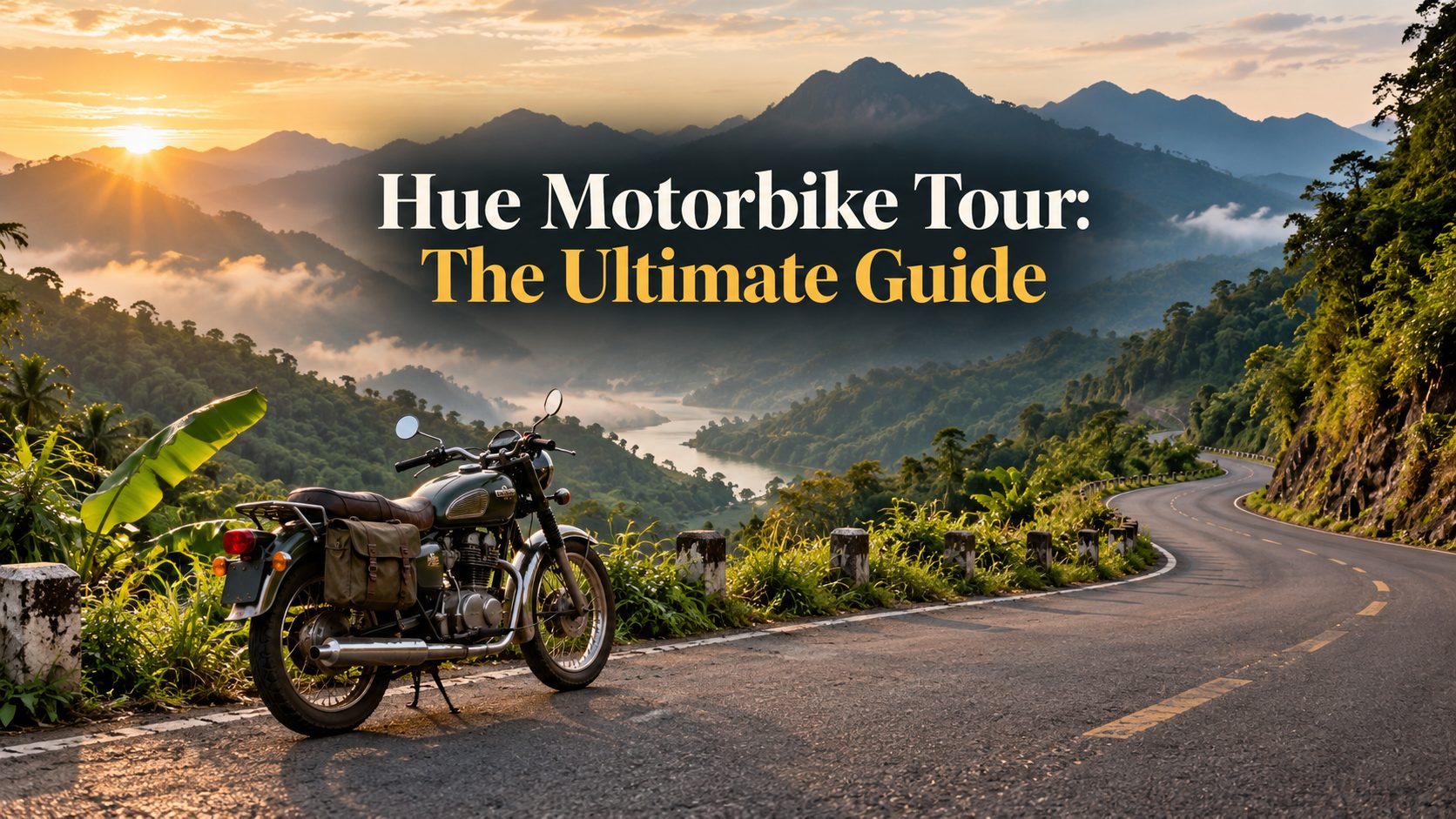
The imperial city of Hue is celebrated for its poetic rivers, moss-covered citadel walls, and grand royal mausoleums. While tour buses shuttle travelers along standardized itineraries, they consistently miss the sensory texture that defines central Vietnam: the fragrance of drying cinnamon incense, the sudden breeze off the Tam Giang Lagoon, and the winding backroads connecting ancient royal hamlets.
A Hue motorbike tour bridges this gap, transforming simple transportation into an immersive adventure. Whether you are driving a vintage semi-automatic or riding pillion behind a licensed local driver, traveling on two wheels grants total freedom of movement. This comprehensive guide details the best routes, safety considerations, preparation tips, and logistics to help you plan the ultimate motorbike journey across Hue and beyond.
Why Choose a Motorbike Tour in Hue?
Riding a motorbike in Hue is distinct from the fast-paced traffic of Hanoi or Ho Chi Minh City. Hue operates at an unhurried, measured pace. Its flat urban layout transitions smoothly into quiet agricultural plains, pine-covered ridges, and expansive lagoons.
       ┌──────────────────────────────────────────────────────────┐
       │             THE TWO-WHEEL ADVANTAGE IN HUE               │
       └──────────────────────────────────────────────────────────┘
             │                                              │
             ▼                                              ▼
   [ Route Flexibility ]                          [ Sensory Immersion ]
   • Access narrow village alleys                 • Scent of incense & lotus
   • Detour past tourist buses                    • Open breeze along rivers
   • Pause at unlisted viewpoints                 • Tactile, ground-level views
-
Access to Hidden Heritage: Several of Hue’s most tranquil landmarks—such as the Tu Hieu Pagoda hidden within a pine forest or the decaying stone dragon at the abandoned Thuy Tien Lake—lie at the end of narrow tracks inaccessible to 45-seat tour buses.
-
Intimate Rural Encounters: Motorbikes let you turn into dirt roads running parallel to irrigation canals, pause by duck farms, and observe family-run craft workshops without disrupting daily routines.
-
Tailored Pace: Instead of abiding by a strict tour clock, traveling by motorbike allows you to stay longer at a peaceful tomb or leave early when mid-day temperatures peak.
Top Hue Motorbike Tour Itineraries
Depending on your available time and comfort behind the handlebars, Hue offers three primary routes ranging from relaxed city exploration to expansive coastal circuits.
1. The Royal Relics & Countryside Loop (Full-Day)
This classic circuit balances Hue’s UNESCO World Heritage architecture with peaceful rural living.
-
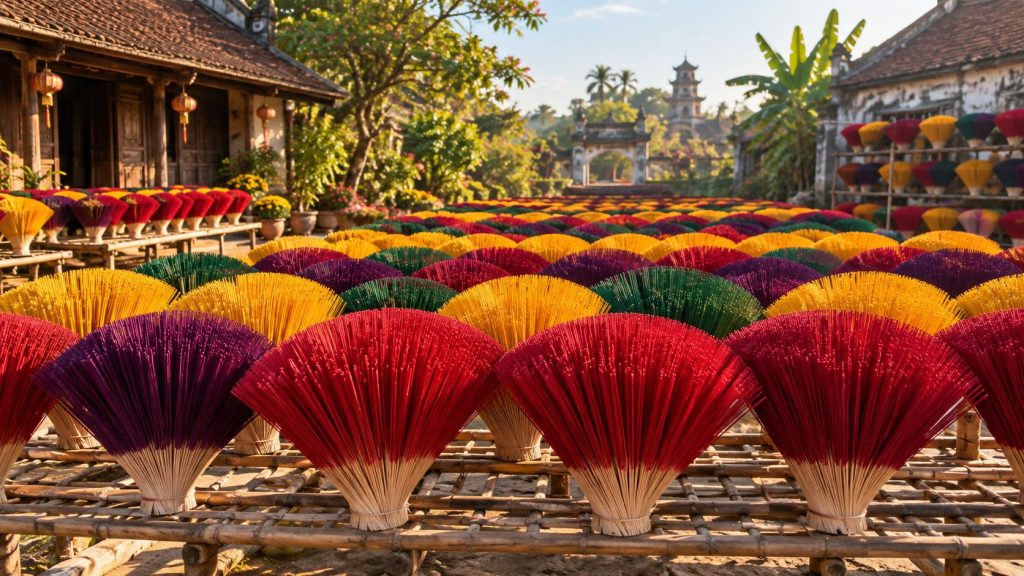
Morning: The Imperial Heart & Craft Villages. Begin at dawn along the Perfume River toward Thien Mu Pagoda, Hue’s oldest seven-story religious pagoda. Continue inland along provincial road DT12 toward Thuy Xuan Incense Village, where brilliant bouquets of colored bamboo incense sticks dry under the morning sun.
-
Midday: Imperial Mausoleums. Steer past the tour-bus congestion and head to Tu Duc Tomb, an expansive complex designed as a working retreat with lotus ponds and wooden pavilions. Follow the winding pine trails up to the hilltop Khai Dinh Tomb, an architectural blend of European Gothic and traditional Vietnamese mosaics.
-
Afternoon: Abandoned Wonders & Rural Canals. Ride south to the perimeter of the abandoned Thuy Tien Lake Waterpark, admiring the weathered dragon sculpture rising out of the water. Conclude your loop at Thanh Toan Tile-Roofed Bridge, an 18th-century covered bridge resting over a sleepy canal bordered by rice fields.
2. Tam Giang Lagoon & Ru Cha Mangrove Forest (Half-Day)
For travelers seeking expansive open landscapes and cooling water vistas, the coastal flats northeast of Hue provide an ideal afternoon escape.
-
Ru Cha Mangrove Sanctuary: Located roughly 15 km from the city center, Ru Cha is the sole remaining primary mangrove forest in Southeast Asia’s largest lagoon system. A newly paved concrete road cuts through dense canopies of white-flowering mangrove trees, offering shaded, atmospheric riding.
-
Tam Giang Lagoon at Sunset: Continue toward the shoreline as the lagoon widens into flat waters. Local fishermen navigate long wooden sampans across fish traps known locally as sáo. Stopping at a stilt bamboo café over the water lets you sample local pan-fried pancakes (bánh khoái cá kình) while watching the sun sink behind the Truong Son mountain range.

3. Coastal Backroads to Dam Chuon
A shorter, 3-hour loop that runs along small canal pathways east of Hue. This route avoids major highways completely, snaking past duck farms, ancestral family shrines, and brick kilns. It is especially suitable for riders who prefer quiet roads with minimal four-wheel traffic.
The Coastal Cross-Province Ride: Hue to Hoi An via the Hai Van Pass
The journey between Hue and Hoi An is widely recognized as one of the finest coastal road trips in Southeast Asia. Spanning approximately 130 to 150 km depending on side diversions, this route can be covered comfortably in 6 to 8 hours.
Hue City (Start) ──► An Bang Cemetery ──► Lang Co Bay ──► Hai Van Pass ──► Da Nang / Hoi An
Route Highlights & Must-See Detours
-
An Bang Cemetery (“City of Ghosts”): Diverting off National Route 1A toward the coastline brings you to An Bang, a fishing village filled with hundreds of palatial, multi-story family tombs decorated in vibrant porcelain mosaics.
-
Lang Co Bay & Lap An Lagoon: Before ascending the mountains, ride along the quiet loop of Lap An Lagoon. The brackish waters sit framed by the misty peaks of Bach Ma National Park, serving fresh oysters and coffee at quiet roadside wooden shacks.
-
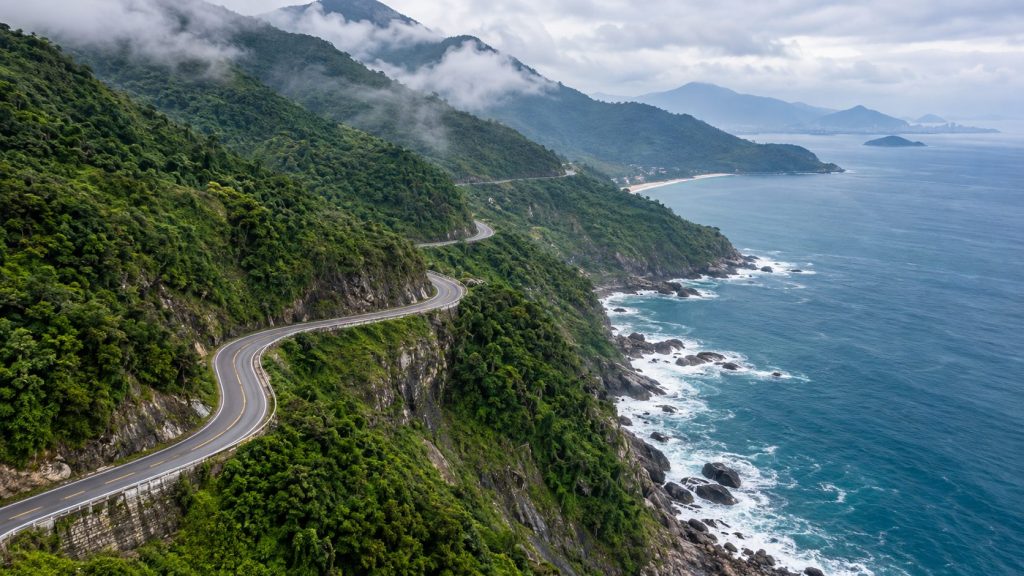
Ascending the Hai Van Pass: Leaving the coastal plains, the road climbs upward into the legendary Hai Van Pass. Rising roughly 500 meters above sea level, this 21 km ribbon of asphalt features sweeping curves, sharp switchbacks, and panoramic views of the South China Sea.
-
Descent into Da Nang & Arrival in Hoi An: Descending the southern side reveals the sprawling coastline of Da Nang. From here, follow the beach boulevards southward directly into the lantern-lit alleys of Hoi An Ancient Town.
Essential Preparation: What You Need to Know Before You Ride
Careful planning ensures your motorbike tour remains safe, comfortable, and legally compliant.
1. Choosing Between Self-Ride and Pillion (Easy Rider)
-
Self-Driving: Best for experienced motorcyclists comfortable with Vietnamese traffic dynamics. You retain absolute control over your stops, schedule, and speed.
-
Pillion Rider (Riding on the Back): The best option for travelers without an international motorcycle license or those unfamiliar with manual transmissions. You sit on a cushioned rear seat, leaving navigation and road safety to a local driver while you photograph the surroundings hands-free.
2. Legal Requirements and Licenses
Driving legally in Vietnam requires clear documentation:
-
An International Driving Permit (IDP) under the 1968 Vienna Convention (for engine displacements above 50cc), accompanied by your home country’s motorcycle endorsement.
-
Comprehensive travel insurance that explicitly covers motorcycle operation at the appropriate engine class.
-
If you lack an IDP or valid motorcycle certification, opting for a licensed pillion driver is the only fully insured, legally compliant way to complete the route.
3. Gear, Luggage, and Safety
-
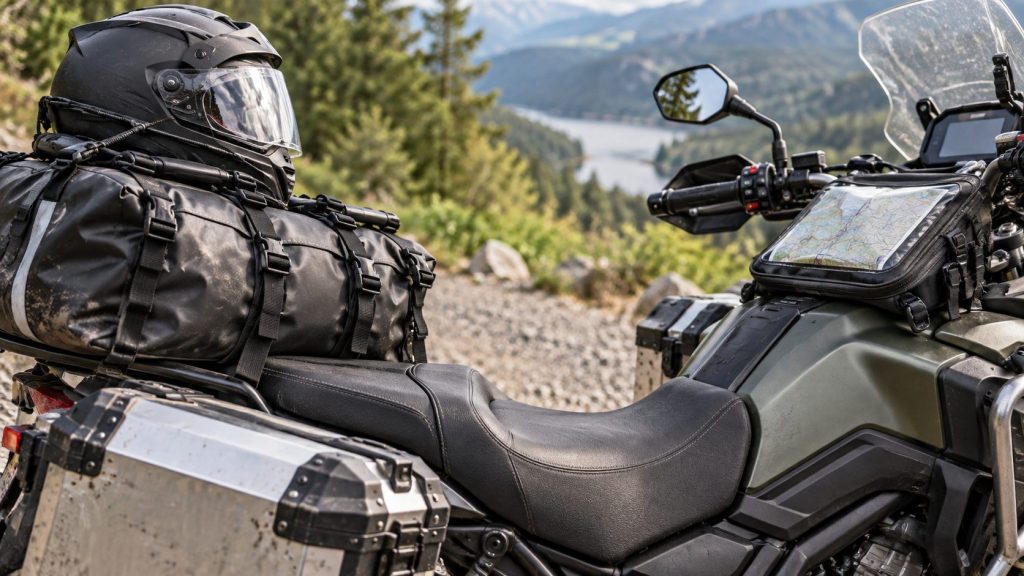
Luggage Transport: Reputable Hue motorbike operators offer direct door-to-door luggage transit. Your heavy backpacks and suitcases are loaded into a support van in the morning and delivered straight to your hotel in Da Nang or Hoi An before your arrival.
-
Helmets: Insist on a three-quarter or full-face helmet with a clear visor. Avoid flimsy, novelty half-helmets (nón bảo hiểm thời trang) common in budget rentals, as they offer negligible impact protection.
-
Weather Layers: Hue experiences distinct seasonal shifts:
-
Dry Season (March to August): High temperatures exceeding 35°C. Carry UV-protective long sleeves, mineral sunscreen, and polarized sunglasses.
-
Wet Season (September to January): Heavy coastal rains and occasional typhoons. Pack a heavy-duty two-piece rain suit rather than disposable plastic ponchos, which tear easily at highway speeds.
-
Cost & Booking Comparison: Self-Drive vs. Guided Pillion Tour
To help determine which travel style suits your budget and risk comfort, review this side-by-side breakdown:
| Criteria | Self-Drive Rental (Local Loop) | Self-Drive One-Way (Hue to Hoi An) | Guided Pillion Tour (Hue to Hoi An) |
| Typical Daily Cost | $6 – $10 USD (150k – 250k VND) | $20 – $30 USD (incl. drop fee) | $45 – $65 USD (1.1M – 1.6M VND) |
| Fuel Expenses | Self-paid (~$3 – $5 USD per tank) | Self-paid (~$4 – $6 USD) | Included in tour package |
| Luggage Transfer | Not required | Included or extra $2 – $4 USD/bag | Included in vehicle or back rack |
| Mechanical Risk | Renter handles puncture repairs | Roadside network assistance | Fully managed by the operator |
| Navigation | Smartphone mount / offline GPS | Smartphone mount / offline GPS | Driven by local route expert |
| Recommended For | Confident, licensed riders | Adventurous independent riders | Solo travelers, non-riders, couples |
Frequently Asked Questions
Is riding a motorbike in Hue safe for beginners?
The inner city of Hue and the surrounding countryside lanes are relatively safe due to low vehicle speeds and wide boulevards. However, the open highways (National Route 1A) feature heavy transport trucks, buses, and unpredictable lane changes. If you do not have regular riding experience back home, book a pillion tour where you ride behind an experienced driver instead of renting a self-drive bike.
How do I handle luggage on a one-way tour from Hue to Hoi An?
Most reputable motorbike rental agencies and tour operators provide luggage transfer services. You drop your bags at your Hue hotel lobby by 8:00 AM; the operator transports them in a secure support van and delivers them to your destination hotel in Hoi An or Da Nang by late afternoon (usually around 4:00 PM to 5:00 PM).
What happens if it rains during the tour?
Central Vietnam’s weather can shift rapidly, particularly when crossing mountain passes. Tour operators provide industrial rain ponchos or two-piece waterproof suits. If severe storms, localized flooding, or dangerous mountain winds occur on the Hai Van Pass, operators will redirect the journey through the lower Hai Van tunnel via passenger car or postpone until conditions stabilize.
Can I drive a 50cc scooter without an international motorcycle license?
Under Vietnamese law, motorized two-wheelers with engine displacements under 50cc do not require an A1 motorcycle license. However, 50cc scooters lack the torque required to carry adult riders up steep inclines like the Hai Van Pass safely. For mountain passes, a 110cc to 150cc bike—or an experienced pillion driver—is strongly recommended.
How long does the Hue to Hoi An motorbike tour take?
Direct riding without stops takes roughly 3.5 to 4 hours. However, a dedicated sightseeing tour takes 6 to 8 hours, leaving ample time to swim at Elephant Springs, eat seafood at Lang Co, inspect the bunkers atop the Hai Van Pass, and explore Marble Mountain before reaching Hoi An before sunset.
Experiencing Hue from the seat of a motorcycle reveals facets of Central Vietnam that air-conditioned coaches simply bypass. From the slow drift of incense smoke across rural lanes to the cool ocean air sweeping over coastal passes, taking a two-wheel route remains the most authentic way to connect with the region’s living heritage. Plan your route according to your riding experience, gear up with proper protection, and set out to explore the imperial capital on your own terms.
To extend your journey further along Vietnam’s coast, continue reading our guide on riding the scenic coastal curves of the Hai Van Pass.
Would you like me to generate ready-to-use social media copy (Facebook, Instagram caption) and an automated email confirmation template for customers booking this Hue motorbike tour?