




The Ultimate Hai Van Pass Travel Guide: Driving Tips & Best Photo Spots
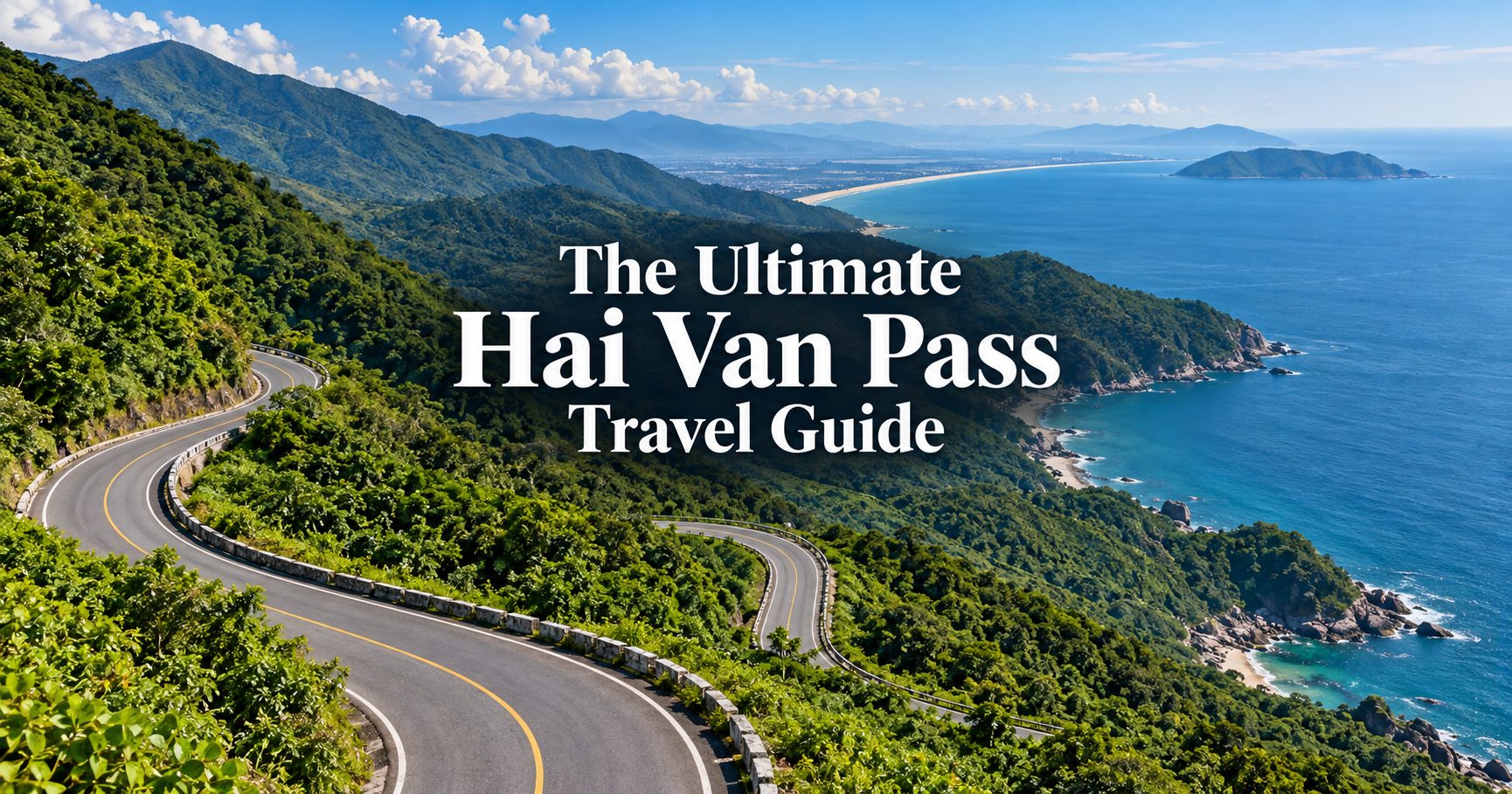
Few coastal roads in the world capture the imagination quite like the Hai Van Pass. Translating to “Ocean Cloud Pass” in Vietnamese, this dramatic, winding mountain road serves as a natural border between Da Nang and Thua Thien Hue province. For decades, it has stood as a rite of passage for adventurers, travelers, and road trip enthusiasts looking to experience the raw, unfiltered beauty of Central Vietnam. Ever since the route was featured on the legendary automotive show Top Gear—where it was famously described as a “deserted ribbon of perfection”—it has cemented its status as one of the best coastal drives in the world.
Whether you are a seasoned motorcyclist looking for a thrilling ride, a photography enthusiast chasing the perfect panoramic shot, or a curious traveler wanting to step back into history, the Hai Van Pass offers an unforgettable journey. This comprehensive guide will walk you through everything you need to know, from advanced driving tips to uncovering the most spectacular, hidden photography spots along the 21-kilometer stretch.
The History and Geographical Significance of the Pass
Before you rev your engine or set up your tripod, understanding the historical and geographical weight of the Hai Van Pass enriches the experience. For centuries, this towering mountain range served as a formidable natural barrier, dividing the ancient Champa Kingdom to the south and the Dai Viet Kingdom to the north.
Geographically, the pass is an extraordinary climatic divide. The Truong Son mountain range juts directly into the East Sea here, creating a distinct meteorological boundary. It is highly common to experience vastly different weather conditions on either side of the mountain. You might begin your ascent in Da Nang under sweltering, clear blue skies, only to cross the peak and descend into Hue surrounded by a cool, mystical blanket of fog and drizzle. This unique weather phenomenon is exactly how the pass earned its poetic name, “Ocean Cloud Pass.”
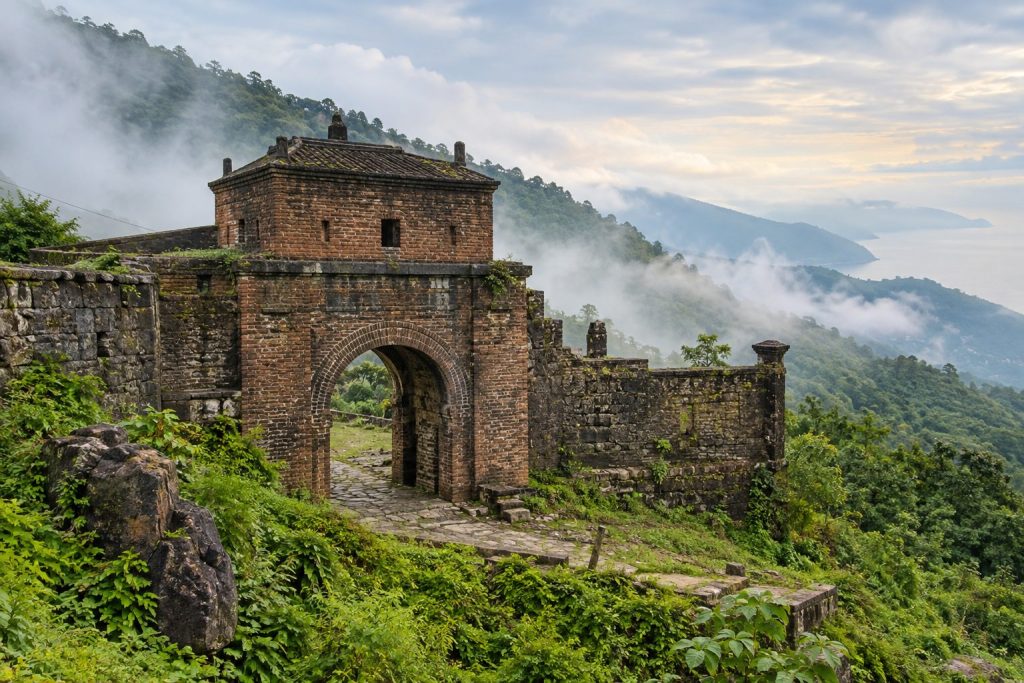
Historically, the pass has been heavily fortified due to its strategic vantage point. At the very peak, sitting 496 meters above sea level, you will find the remnants of Hai Van Quan (Hai Van Gate). Built during the Tran Dynasty and later reinforced by the Nguyen Dynasty, this gate served as a vital military checkpoint. Later, during the Indochina and Vietnam Wars, French and American forces built robust concrete bunkers to secure the route. Today, these moss-covered structures stand as silent witnesses to history, juxtaposed against the breathtaking natural scenery of the coast.
The Ultimate Driving Guide: Conquering the Hai Van Pass
Driving the Hai Van Pass is an exhilarating experience, but it requires preparation, respect for the road, and a solid understanding of mountain driving mechanics. The road spans approximately 21 kilometers, featuring steep inclines, sharp descents, and notoriously tight hairpin turns. While the opening of the Hai Van Tunnel in 2005 diverted the majority of heavy truck and bus traffic away from the mountain, the pass still demands your full attention.
Choosing the Right Vehicle
Your choice of vehicle will dictate your experience. The most popular and immersive way to cross the pass is on two wheels. Feeling the shift in temperature, smelling the salty ocean air mixed with pine, and having the freedom to pull over at a moment’s notice is unparalleled. For this, booking a structured hue motorbike tour is highly recommended for those who want the thrill of the ride but prefer the safety of an experienced lead guide and well-maintained equipment.
If you choose to rent your own motorbike, opt for a semi-automatic (like a Honda Wave or Yamaha Sirius) or a manual motorcycle. Do not use a fully automatic scooter (like a Honda Nouvo or Airblade) if you are an inexperienced rider. Automatic scooters rely solely on their brake pads to slow down on steep descents. On a 10-kilometer downhill stretch, continuous braking can cause the brakes to overheat and completely fail, leading to catastrophic accidents. With a semi-automatic or manual bike, you can utilize engine braking by dropping into a lower gear, safely controlling your descent without frying your brake pads.
Essential Safety and Riding Tips
-
Master Engine Braking: When descending towards either Hue or Da Nang, keep your motorbike in 2nd or 3rd gear. Let the engine’s natural resistance slow the bike down. Only tap your brakes gently before entering sharp corners.
-
Honk at Blind Corners: The pass features several blind U-turns. Always stay strictly in your lane (on the right side) and give a short, sharp honk as you approach a blind corner to alert oncoming traffic.
-
Watch the Weather: The weather can change in a matter of minutes. Always pack a high-quality rain poncho. If you encounter heavy fog at the peak, turn on your headlights, slow down to a crawl, and use the white lines on the edge of the road as your visual guide.
-
Fuel Up: There are very few reliable places to buy high-quality gasoline on the mountain itself. Ensure your tank is completely full before leaving Da Nang or Lang Co town.
-
Check Your Equipment: Before starting your ascent, personally check your tire tread, front and rear brakes, and headlight.
Best Photography Spots Along the Route
The Hai Van Pass is a paradise for photographers. From sweeping oceanic panoramas to moody, fog-draped historical ruins, the route offers endless opportunities for spectacular imagery. To make the most of your journey, you need to know exactly where to stop. Here are the most photogenic locations along the pass.
1. The Lonely Pine Tree (Cây Thông Cô Đơn)
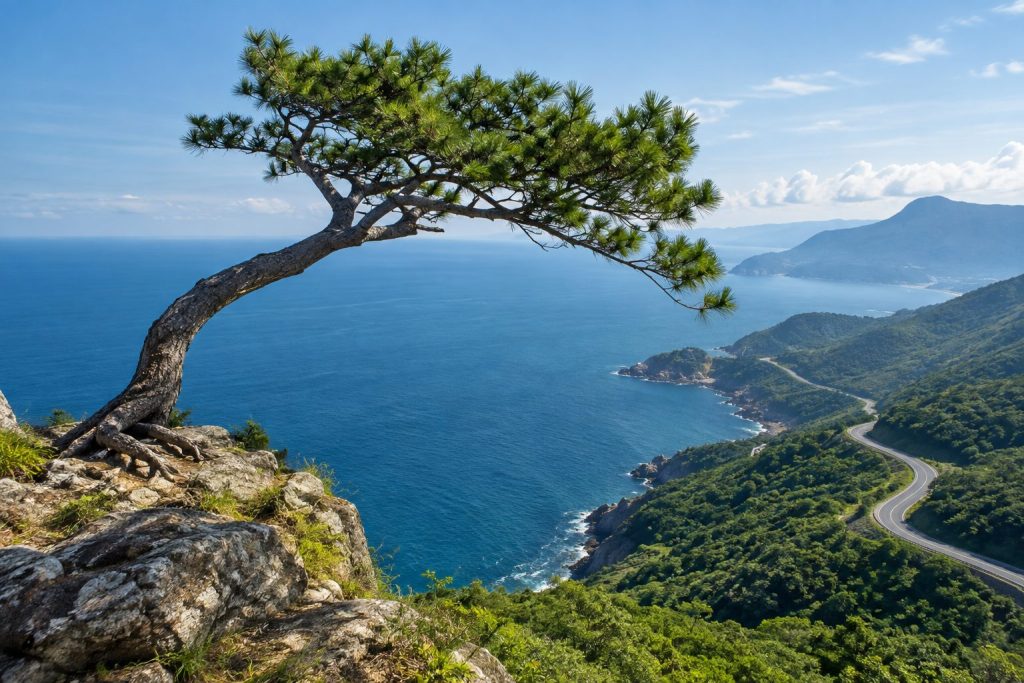
Located on the Da Nang side of the pass, about a third of the way up, you will find the famous “Lonely Pine Tree.” This solitary tree dramatically leans out over the edge of a cliff, framing the vast expanse of the Gulf of Tonkin behind it.
-
Photography Tip: This spot is wildly popular, so arriving early in the morning is crucial to avoid crowds. A wide-angle lens (16mm to 24mm) works best here to capture the tree’s isolation against the sweeping curve of the coastline and the distant skyline of Da Nang.
2. The U-Turn Bridge and Turtle Rock
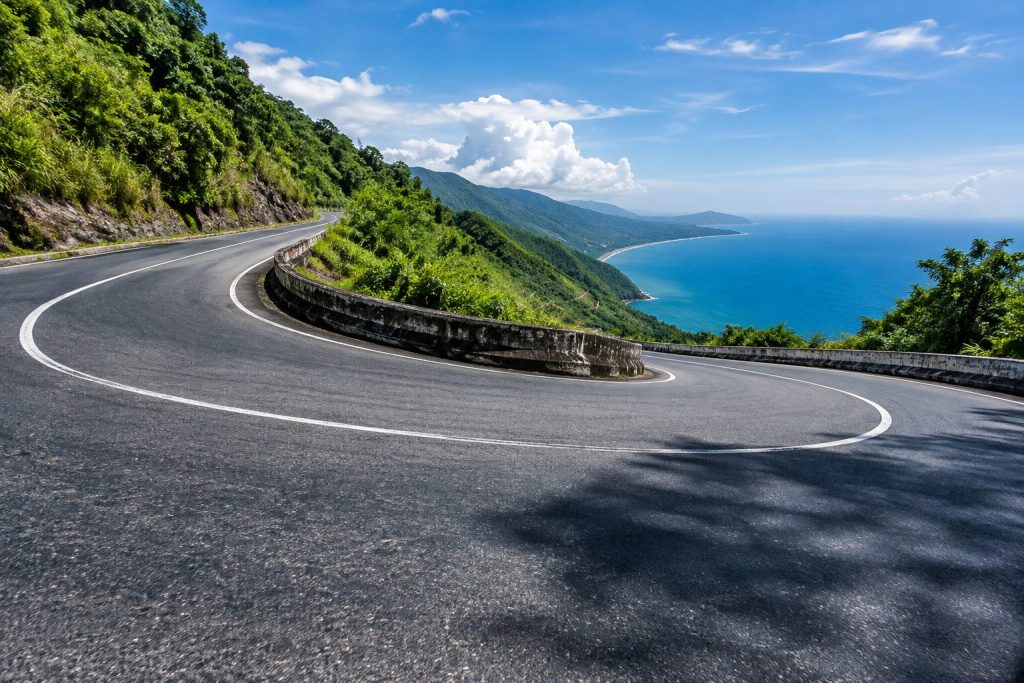
As you continue your ascent, you will encounter the most dramatic hairpin turn on the pass, known to locals as the “U-Turn Bridge.” The road violently curves back on itself, supported by concrete pillars jutting out from the mountain. Just off to the side sits a massive, flat boulder known as Turtle Rock.
-
Photography Tip: Sitting on Turtle Rock provides an incredible vantage point looking down at the curving road. For drone photographers, this is the premier spot to launch. A top-down drone shot reveals the sheer engineering marvel of the road cutting through the dense jungle canopy.
3. Hai Van Gate and the French Bunkers
Reaching the summit, you will find the historical peak of the pass. The brick archway of Hai Van Gate and the decaying French and American pillboxes provide a moody, historical contrast to the natural beauty.
-
Photography Tip: This area is frequently engulfed in passing clouds. Do not be disappointed if it is foggy; use it to your advantage. The mist adds incredible atmosphere and depth to photographs of the ruins. Use a standard lens (35mm or 50mm) to capture the textured details of the moss-covered brickwork and the bullet-scarred concrete of the bunkers.
4. Cu Du Village Viewpoint and Lang Co Bay Panorama
Once you cross the peak and begin your descent into Thua Thien Hue province, the landscape shifts. You will be greeted by an awe-inspiring, unobstructed view of Lang Co Bay—a perfect crescent of white sand flanked by turquoise waters and a sprawling lagoon.
-
Photography Tip: There are several small dirt pull-offs on the descent. Stop at one of these safe areas and use a telephoto lens (70-200mm) to compress the background, capturing the intricate details of the fishing boats in the lagoon, the long bridge of the national highway, and the towering mountains in the distance.
The Best Time to Visit and Conquer the Pass
Timing your journey over the Hai Van Pass is essential for both safety and visibility. The dry season, which runs from March to September, offers the most reliable weather conditions. During these months, the skies are generally clear, providing vibrant colors for photography and dry roads for safe riding.
Morning vs. Afternoon: Starting your journey early in the morning (around 7:00 AM to 8:00 AM) is highly recommended. The morning light provides a soft, golden glow that is perfect for photography, and the temperature remains cool. Additionally, starting early allows you to beat the heavy traffic of day-trippers and large tour buses that tend to arrive at the peak by mid-day.
If you prefer an afternoon ride, aim to begin your ascent around 3:00 PM. This timing allows you to reach the summit as the sun begins to lower, and you can complete your descent into either Da Nang or Lang Co Bay just in time to watch a spectacular sunset. However, never attempt to drive the pass after dark. There are no streetlights on the mountain, the hairpin turns are completely blind, and the sudden drops in temperature can be incredibly dangerous.
Alternative Ways to Experience the Pass
While driving a motorbike offers the most visceral experience, it is not the only way to enjoy the Hai Van Pass. If you are uncomfortable riding a motorcycle, or if you are traveling with family or heavy luggage, there are several fantastic alternatives.
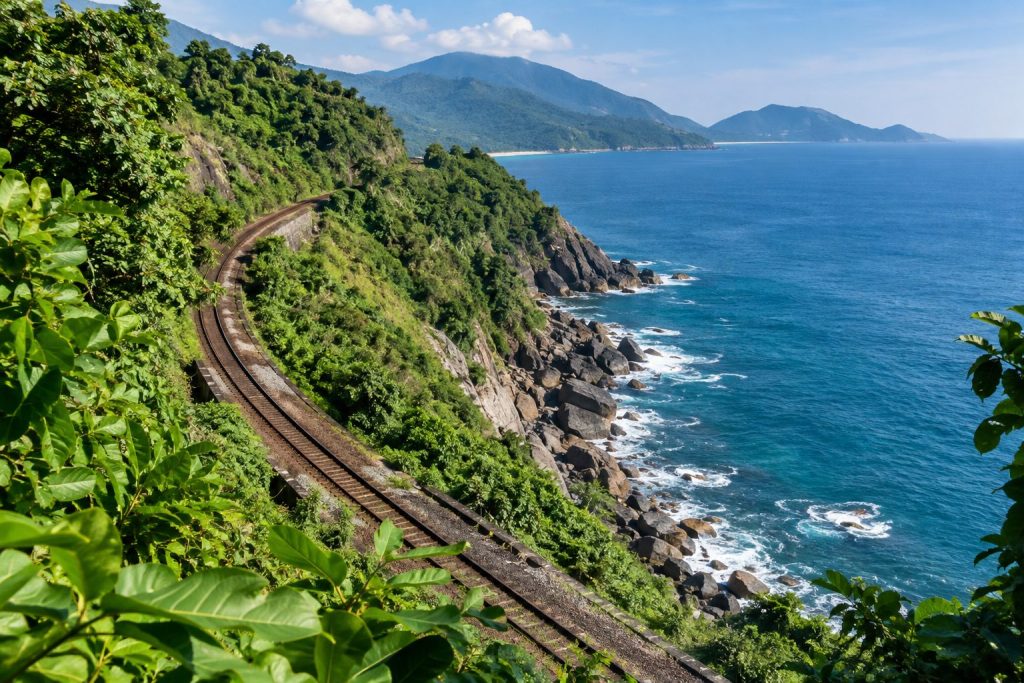
By Train: The North-South railway line runs right along the base of the mountain, hugging the coastline just meters above the crashing waves. Taking the train from Da Nang to Hue (or vice versa) offers a completely different, leisurely perspective of the landscape. The train winds through tunnels and along cliffs that are inaccessible by road.
By Open-Air Jeep: For a blend of comfort and open-air excitement, booking a jeep tour from hue to hoi an is an outstanding choice. Riding in a restored US military Jeep allows you to stand up, feel the wind, and take unobstructed photographs without the stress of navigating the challenging roads yourself. Jeep tours also typically include stops at other notable destinations along the way, such as the Marble Mountains, Lap An Lagoon, and Elephant Springs.
Private Car Transfers: If comfort and air-conditioning are your top priorities, hiring a private car is the most convenient option. You can request your driver to take the scenic mountain pass rather than the tunnel. Most drivers are happy to pull over at the major viewpoints and wait while you take photographs and explore the historical ruins at the peak.
Final Preparations for Your Journey
Before you set out, make sure you have prepared appropriately. The coastal sun can be intense, so sunscreen, sunglasses, and a long-sleeved lightweight jacket are essential to prevent windburn and sunburn. Bring a fully charged camera or smartphone, as the sheer volume of scenic stops will drain your battery quickly. Finally, pack plenty of drinking water; while there are small cafes at the summit and the base, hydration during the drive is critical.
The Hai Van Pass is more than just a road connecting two cities; it is an experience that encapsulates the very essence of Vietnam’s rugged coastal beauty. By driving safely, respecting the weather conditions, and knowing exactly where to stop, you will ensure that your journey over the Ocean Cloud Pass is the absolute highlight of your Vietnamese adventure.
QnA: Frequently Asked Questions About Hai Van Pass
1. How long does it take to drive the Hai Van Pass? Without stopping, the 21-kilometer stretch takes about 45 minutes to 1 hour to drive. However, you should allocate at least 2.5 to 3 hours for the journey to allow for multiple photography stops, coffee breaks, and exploring the historical gates at the summit.
2. Is it safe for beginners to ride a motorbike over the pass? It is not recommended for absolute beginners. The road features steep inclines and blind hairpin turns. If you lack experience with gears and engine braking, it is much safer to book a guided motorbike tour where you ride as a passenger (pillion), or choose a Jeep/car transfer.
3. Are there gas stations on the mountain? There are no official gas stations on the pass itself. While you might find a few local vendors selling fuel from plastic bottles at a premium price, it is highly advised to completely fill your tank in Da Nang or Lang Co before starting the climb.
4. Do I have to pay a toll to drive over the mountain pass? No, driving over the actual mountain road is completely free for motorbikes and cars. Tolls are only required if you are driving a car or bus through the Hai Van Tunnel. Motorbikes are strictly prohibited from driving through the tunnel anyway.
5. Can I fly a drone on Hai Van Pass? Yes, drone flying is generally permissible along most of the pass, and it offers incredible top-down views of the coastal curves. However, exercise extreme caution regarding strong coastal winds and sudden fog, which can interfere with the drone’s sensors and battery life. Always maintain a line of sight.