




Hue to Da Nang Train: Scenic Coastal Railway Guide

Traveling by train from Hue to Da Nang is one of the simplest ways to turn a short transfer into a sightseeing experience. Instead of spending the entire journey on a highway, the railway passes lagoons, forested mountains, coastal cliffs, beaches, fishing villages, and the dramatic Hai Van Pass. For travelers building a Central Vietnam itinerary, the Hue to Da Nang train is therefore more than transportation: it is a scenic bridge between two very different destinations.
The rail distance is just over 100 km, and most regular services take roughly 2.5 to 3 hours. Dedicated heritage services can take longer because they are designed around the journey itself rather than simply getting passengers from A to B. As of September 2026, Vietnam Railways’ published timetable shows several Reunification Express services calling at both Hue and Da Nang, while dedicated Hue–Da Nang heritage trains also operate on the corridor. Schedules can change, so always verify your exact travel date before paying.
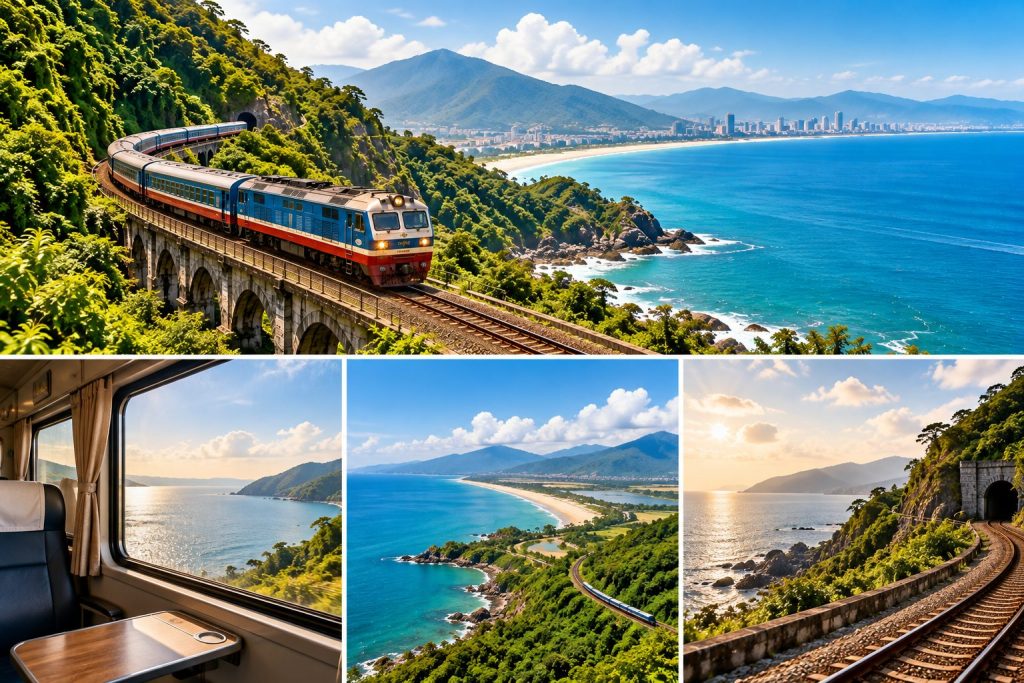
Hue to Da Nang Train at a Glance
The route is easy to understand. You board at Hue Railway Station, travel south through the coastal landscape of Central Vietnam, cross the Hai Van Pass by rail, and arrive at Da Nang Railway Station near the city center.
For most travelers, the biggest advantages are scenery, comfort, and the fact that railway stations are located inside the cities rather than far outside them. The trip is short enough that a soft seat is normally sufficient, although sleeper cabins may appear on some long-distance trains because those trains continue much farther south.
A current Vietnam Railways timetable lists SE7, SE5, SE9, SE3, and SE1 services passing from Hue to Da Nang. The same official timetable shows examples such as SE3 leaving Hue at 07:55 and reaching Da Nang at 10:43, and SE1 leaving Hue at 10:30 and arriving at 13:29. Evening services are also available. These are published timetable times rather than guarantees for every date, so check again close to departure.
Current Hue to Da Nang Train Times and Typical Fares
There is no single “best” departure because the ideal train depends on whether you value daylight scenery, price, or arrival time.
For scenic views, a morning or early-afternoon departure is usually the strongest choice. Daylight matters on this route because the most memorable section runs along the mountain and sea around Hai Van Pass. A late-evening train may still be practical, but you will lose much of the reason people recommend this railway.
September 2026 booking results illustrate the range of services travelers may see. On selected dates, standard trains such as SE3, SE1, SE7, SE5, and SE9 were listed alongside dedicated HĐ heritage services. Sample prices ranged from below VND 100,000 for some standard seats to above VND 200,000 for heritage services or different inventory conditions. Fares vary by train, seat type, booking channel, and remaining availability.
Treat online fare examples as a planning guide, not a fixed price. If your dates fall on weekends, public holidays, or major travel periods, booking earlier is sensible.
| Train type | Typical journey | Best for |
|---|---|---|
| SE/Reunification train | Around 2.5–3 hours | Price, schedule flexibility |
| HĐ heritage train | Around 3–4 hours depending on service | Scenic experience, culture, leisurely travel |
| Evening train | Around 2.5–3 hours | Travelers prioritizing timing over views |
Why the Hue to Da Nang Train Is So Scenic
The main reason to choose rail is the landscape between Hue and Da Nang. After leaving the urban area, the route moves toward lagoons and lowland scenery before climbing into the coastal mountains.
The highlight is Hai Van Pass. The railway does not simply follow the modern road. It curves along the mountainside, often placing the sea below the train and steep green slopes above it. Depending on weather, passengers may see blue water, cloud-covered ridges, rocky coastline, isolated beaches, railway tunnels, and bends where the train itself becomes visible through the window.
Lang Co is another visual highlight. The area sits between lagoon, mountains, and sea, giving the journey a layered landscape that changes quickly within a relatively short distance. The dedicated heritage service also uses Lang Co as an important point on the route, reinforcing the idea that this is a tourism experience as much as a transportation link. Vietnam Railways describes the journey as a roughly three-hour passage through Hai Van Pass connecting Hue and Da Nang.
The Hue–Da Nang Heritage Train
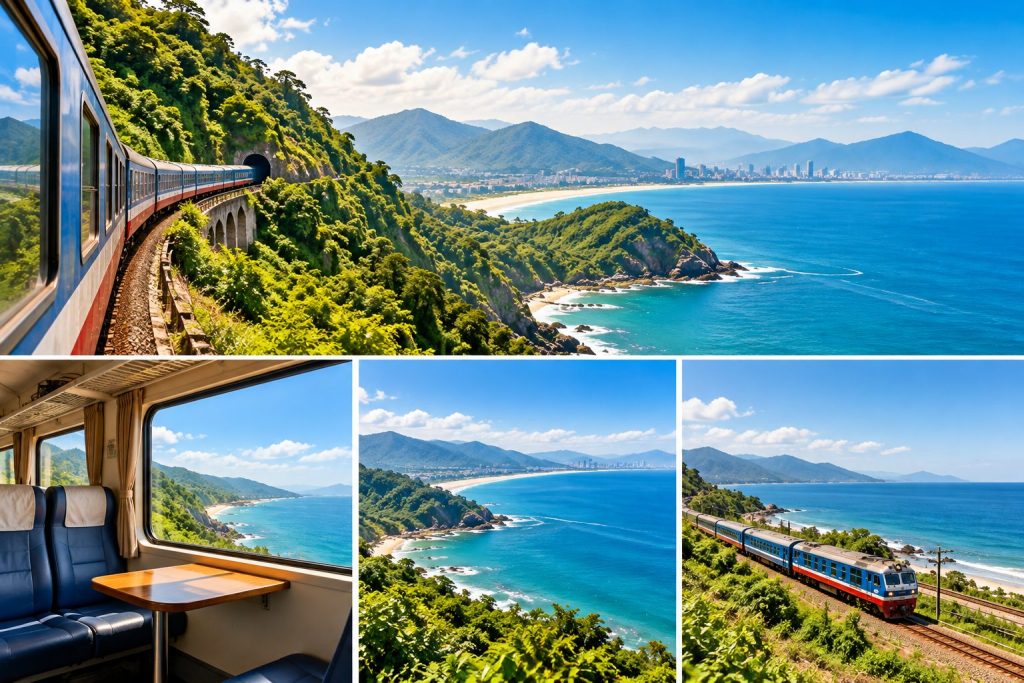
Travelers searching “Hue to Da Nang train” may encounter the Central Heritage Connection service, usually associated with HĐ train numbers. This service was created specifically to turn the railway corridor into a tourism product rather than treating it only as an intercity transfer.
In 2026, the train received a refreshed design and upgraded passenger experience. Da Nang’s official newspaper reported that the train uses a purple-and-light-grey exterior concept and has upgraded seating, including seats that can rotate 180 degrees so passengers can better face the travel direction and scenery.
The heritage train generally takes longer than the fastest regular services, but that is part of the appeal. It is intended for travelers who want a slower, more memorable journey and a stronger sense of Central Vietnamese culture. Vietnam News Agency described the route as a cultural tourism experience combining landscape, music, cuisine, and railway travel.
If the heritage train fits your itinerary, compare it with the standard SE trains rather than assuming one is automatically better. Standard trains may offer a lower fare or more convenient departure, while the heritage service may offer a more distinctive trip.
Which Side of the Train Has the Best View?
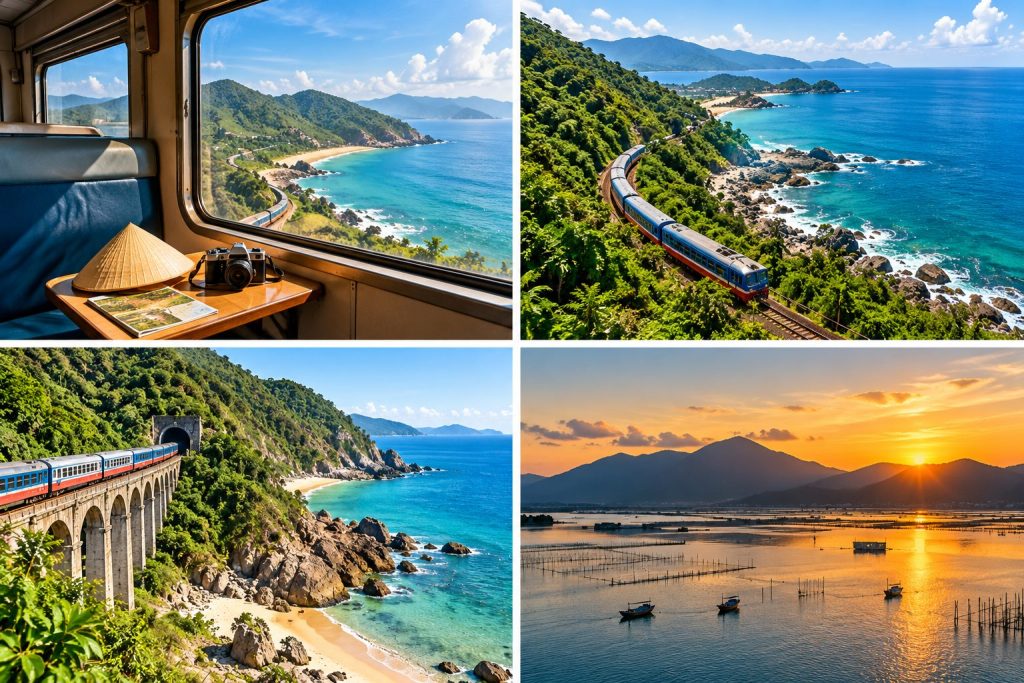
This is one of the most common practical questions. On the southbound journey from Hue to Da Nang, many travelers prefer the left side for portions of the coastal section because it can open toward the sea. However, the railway curves frequently, and good views appear from both sides at different moments.
The better strategy is to prioritize a daylight departure and a window seat. If your carriage is not full, you may be able to move briefly to an empty window when the scenery changes, provided you do not occupy another passenger’s reserved seat.
Keep your camera ready before the train reaches the Hai Van section. The landscape can change quickly between tunnel, forest, cliff, and sea. Reflections from the window can also be strong, so holding the lens close to the glass often helps.
How to Book the Hue to Da Nang Train
The safest approach is to check Vietnam Railways’ current timetable and booking system for your exact date. You can also compare reputable booking platforms, but the operator’s timetable is the best reference point when services conflict.
When searching, use Hue as the departure station and Da Nang as the arrival station. Review the train number, departure time, journey duration, seat class, and cancellation rules before payment.
For this short trip, an air-conditioned soft seat is usually the most practical choice. A sleeper can be comfortable but is rarely necessary unless you specifically want more space or the seat inventory is sold out.
Book earlier if you are traveling around Vietnamese holidays, summer weekends, or festival periods. The route is popular with both domestic and international travelers, and the most convenient daytime departures can become limited.
What to Expect at Hue Railway Station and On Board
Arrive around 30 minutes before departure if you already have a confirmed ticket, and allow more time if you need to collect or verify a booking. Keep your ticket and identification accessible and confirm the carriage number before boarding.
Normal suitcases and backpacks are manageable, although storage space varies by carriage. Bring water, a small snack, your phone or camera, and a light layer for air conditioning. Catering differs by train, and the ride can occasionally feel noisy or bumpy, so simple preparation makes the short journey more comfortable.

Arriving in Da Nang
Da Nang Railway Station is conveniently located within the urban area, making it easy to continue by taxi, ride-hailing car, or private transfer. From the station, you can head to the Han River, My Khe Beach, your hotel, or continue south toward Hoi An.
If Da Nang is your base, arriving around late morning or early afternoon works well because you still have time to check in and explore. A morning Hue departure can therefore fit naturally into a two-city itinerary without sacrificing an entire day to transportation.
Travelers who want to connect sightseeing between Da Nang and Hoi An can continue with a Da Nang – Hoi An tour after staying in Da Nang or arranging the next stage of the trip.
Can You Take the Train Directly from Hue to Hoi An?
No passenger railway station serves Hoi An Ancient Town itself. Travelers heading from Hue to Hoi An by rail normally use Da Nang as the practical gateway and then continue by road.
That means the typical journey is Hue → Da Nang by train → Hoi An by road. The final leg can be completed by taxi, private car, shuttle, or tour service. This combination lets you enjoy the scenic railway without giving up the convenience of a direct road transfer for the final section.
If Hoi An is your final destination rather than Da Nang, see our Hue to Hoi An train guide for the full connection strategy, transfer options, and timing considerations.
Hue to Da Nang Train vs Bus, Car, or Motorbike
The train is the strongest option for travelers who want scenery without having to drive. You can sit back, move around more easily than in a car, and watch the coastline rather than concentrating on traffic.
A private car is usually more flexible. It can provide hotel-to-hotel service and optional stops at Lang Co, Hai Van Pass viewpoints, or other attractions. For families with heavy luggage or travelers on a tight schedule, that convenience can outweigh the appeal of rail.
Buses and shared vans can be economical and direct, but the experience depends heavily on traffic and pickup arrangements. Motorbikes offer maximum freedom for experienced riders, yet weather and mountain-road conditions matter.
Choose the train when the journey itself is part of your travel experience. Choose road transport when door-to-door convenience or custom stops are more important.
Practical Tips for the Best Journey
Check the timetable again one or two days before departure because railway schedules can be adjusted. Choose daylight if scenery is your priority. Reserve a window seat when the booking system allows it. Keep your phone charged, but do not spend the entire Hai Van section looking through a screen.
Weather also changes the mood of the journey. Clear days reveal the coastline most dramatically, while mist can make the mountains feel atmospheric and cinematic. Heavy rain can reduce visibility, especially during Central Vietnam’s wetter months.
Finally, avoid scheduling an extremely tight flight or international connection immediately after the train. Rail travel is generally straightforward, but delays are always possible.
Is the Hue to Da Nang Train Worth It?
Yes, especially for travelers who enjoy slow travel, landscape photography, railway journeys, or simply want a more memorable alternative to another highway transfer.
The route is short enough to fit easily into a Central Vietnam itinerary, but scenic enough to feel like an activity in its own right. The combination of Hue’s heritage atmosphere, Lang Co’s lagoon scenery, Hai Van Pass, and Da Nang’s coastline gives the trip a strong sense of progression from one destination to the next.
For the best experience, travel during daylight, choose a window seat, compare standard and heritage train options, and verify the latest schedule before booking. With a little planning, the Hue to Da Nang train becomes one of the most enjoyable ways to move between two of Central Vietnam’s most important travel hubs.
Q&A
How long is the train from Hue to Da Nang?
Most regular trains take approximately 2.5 to 3 hours, while dedicated heritage services may take longer depending on the timetable and scheduled stops.
How much is the Hue to Da Nang train?
Prices vary by service, seat type, date, and availability. September 2026 searches showed some standard fares below VND 100,000, while heritage or higher-priced options could exceed VND 200,000. Always check the live fare for your travel date.
Is the Hue to Da Nang train scenic?
Yes. The railway crosses the Hai Van Pass and follows sections of coastline overlooking the sea, mountains, beaches, and Lang Co area. Vietnam Railways specifically promotes the heritage route around this scenic experience.
Which side should I sit on from Hue to Da Nang?
A left-side window seat can provide excellent sea views on parts of the southbound trip, although the track curves and scenery appears on both sides.
Is there a direct train from Hue to Hoi An?
No. Hoi An does not have a passenger railway station. Take the train to Da Nang, then continue to Hoi An by road.
Should I choose the heritage train or a regular SE train?
Choose the heritage train if the journey and cultural experience are priorities. Choose an SE train if you prefer a wider selection of departure times, a potentially shorter journey, or lower fares.
Where should I book the train?
Check the official Vietnam Railways timetable/booking system for your exact date, then compare other reputable booking channels if useful. Published times can change.
Could the schedule change in 2026?
Yes. Current sources show timetable variations between operator pages and date-specific booking results, so the exact train number and time should always be reconfirmed before departure.